A2 Ghee Price in India: Why Bilona Costs More
The arithmetic behind a ₹1,500 jar, written out. Litres of milk, hours of churning, and the lab bill.
It takes close to 30 litres of milk to make one kilo of our ghee. A supermarket kilo made from separated cream needs about 18 to 20 litres, and the milk itself costs less because it comes from cows bred to produce more of it. That gap is most of the price difference. The rest is the churning and the lab.
Here is the sum, written out.
Start with the cow
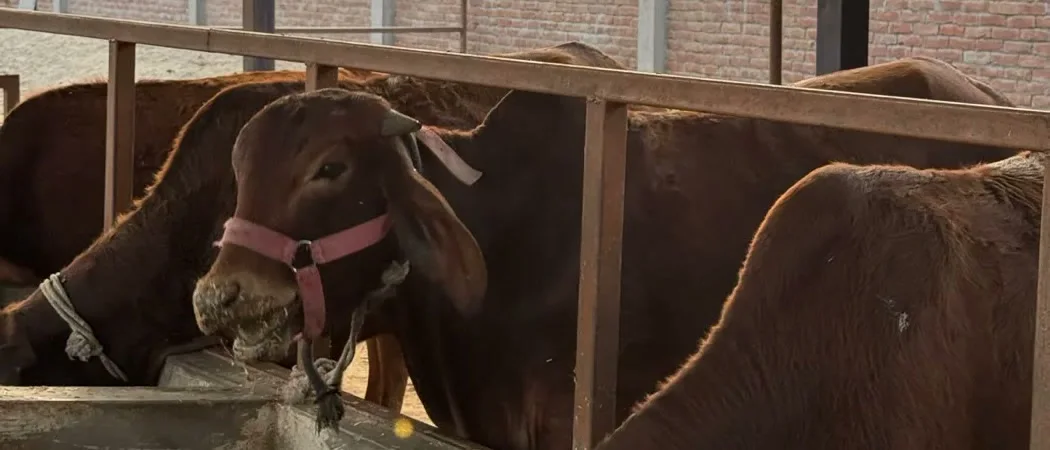
A Sahiwal in good condition gives 8 to 12 litres a day. A crossbred Holstein Friesian gives 20 to 25 on commercial feed. Same shed, same labour, same veterinary cost, half the milk.
Native breeds also dry off for longer between calvings. Over a year, the difference in output per animal is larger than the daily figures suggest.
None of that is a criticism of crossbred dairy. It exists because India needed milk volume and it delivered. But if you want Sahiwal milk specifically, you are paying for an animal that produces less of it.
Then the method
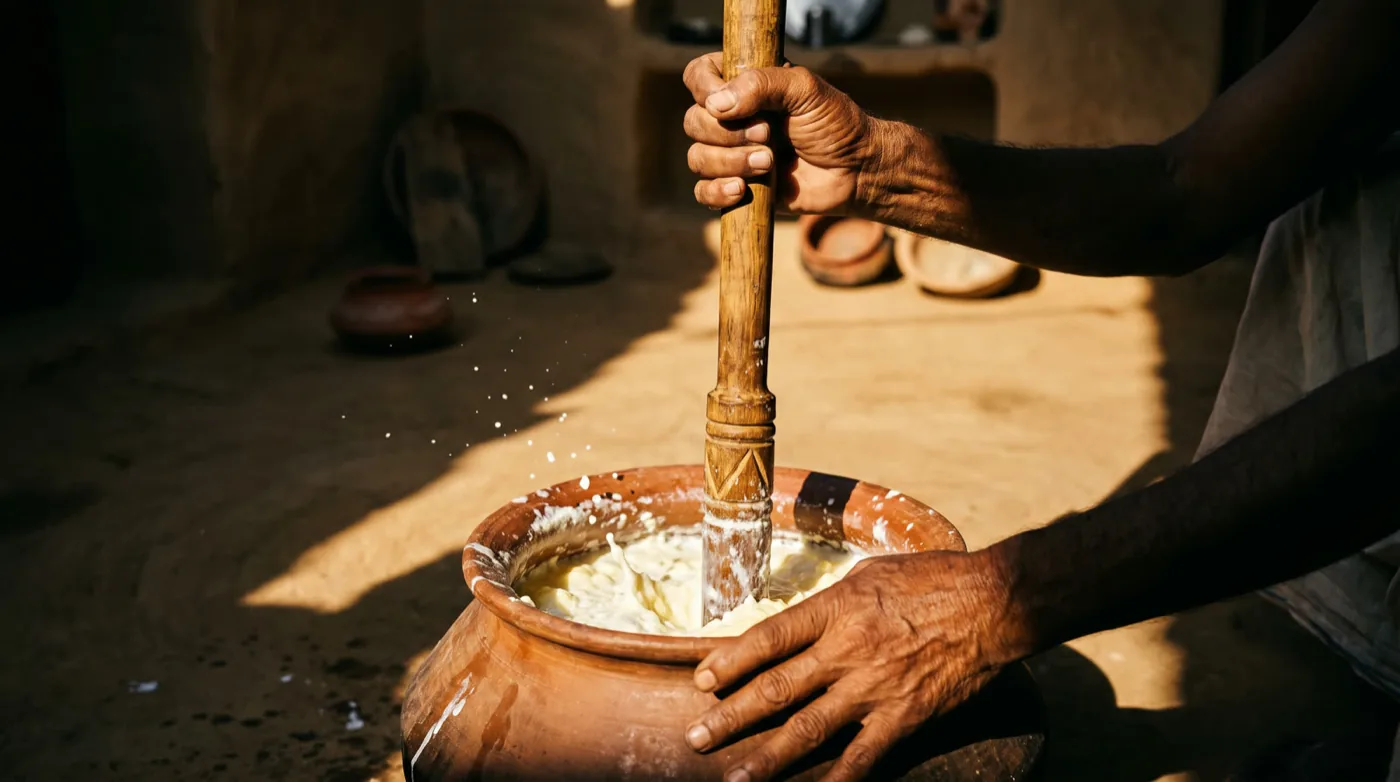
Bilona means the milk is set into curd first, churned, and only then cooked. Cream separation skips both steps. A machine pulls the fat out of fresh milk in minutes.
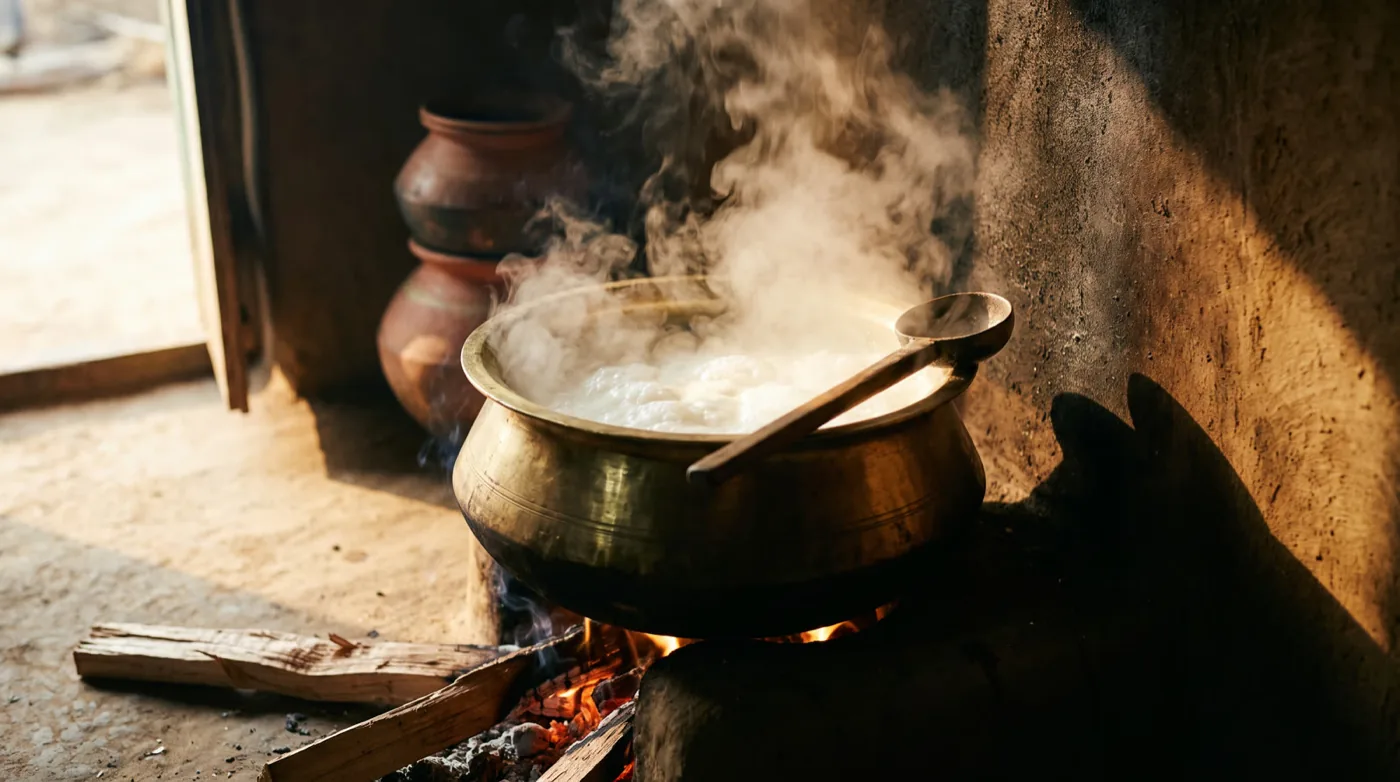
Curd churning gives less ghee per litre of milk. It also takes a person, a wooden churn, and a couple of hours in the early morning. Then the butter is cooked slowly over wood until the water is gone and the solids brown.
You are paying for two things here. Lower yield, and labour that a machine could have done faster.
Then the testing
We send samples to a NABL-accredited food-testing lab at regular intervals. A full panel is not cheap, and it is entirely optional. No rule requires us to publish it, and most brands do not.
We do it because the word pure is worthless without a document behind it, and because we would rather find a problem ourselves than have a customer find it. The reports are on the lab reports page and behind the QR on every jar.
Then the glass
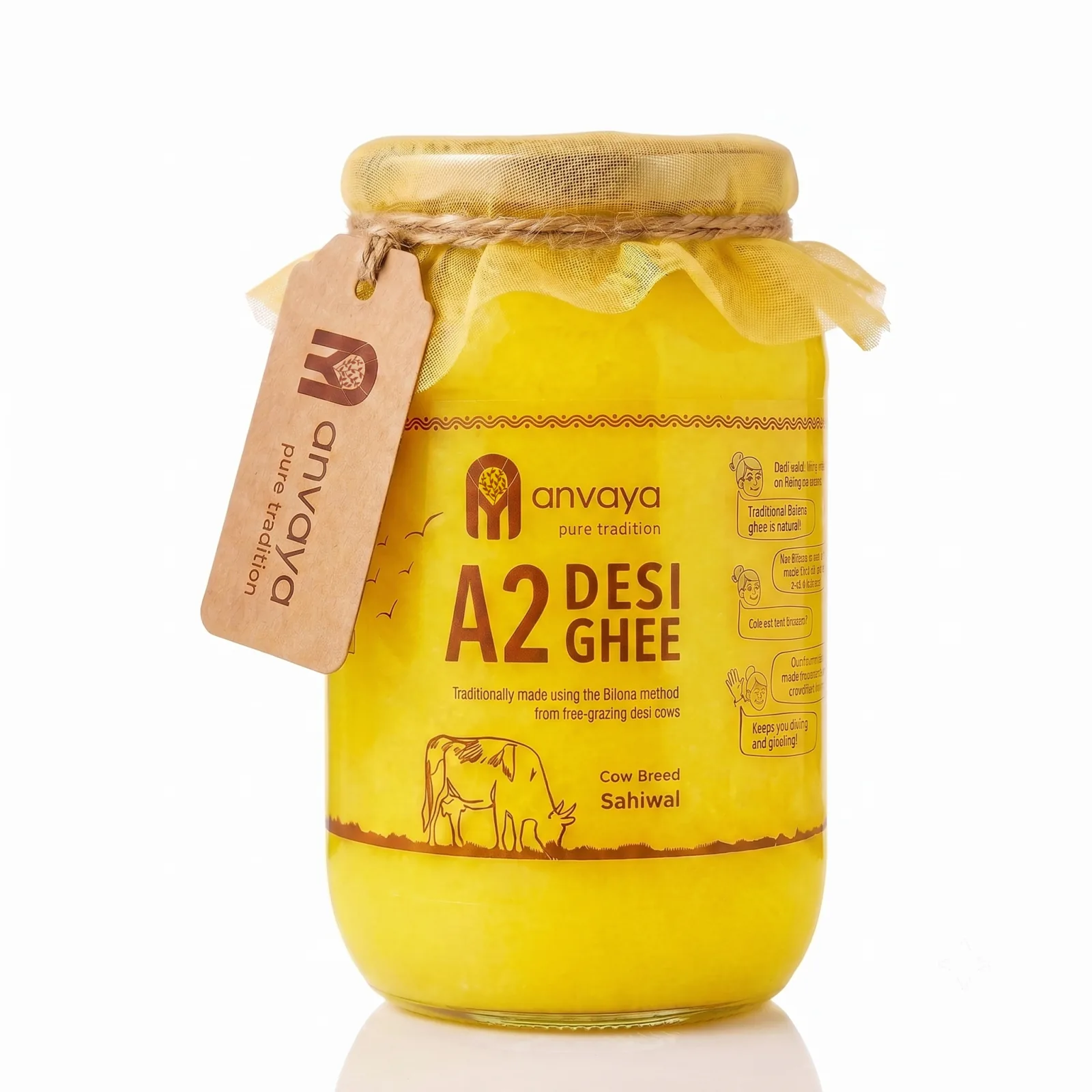
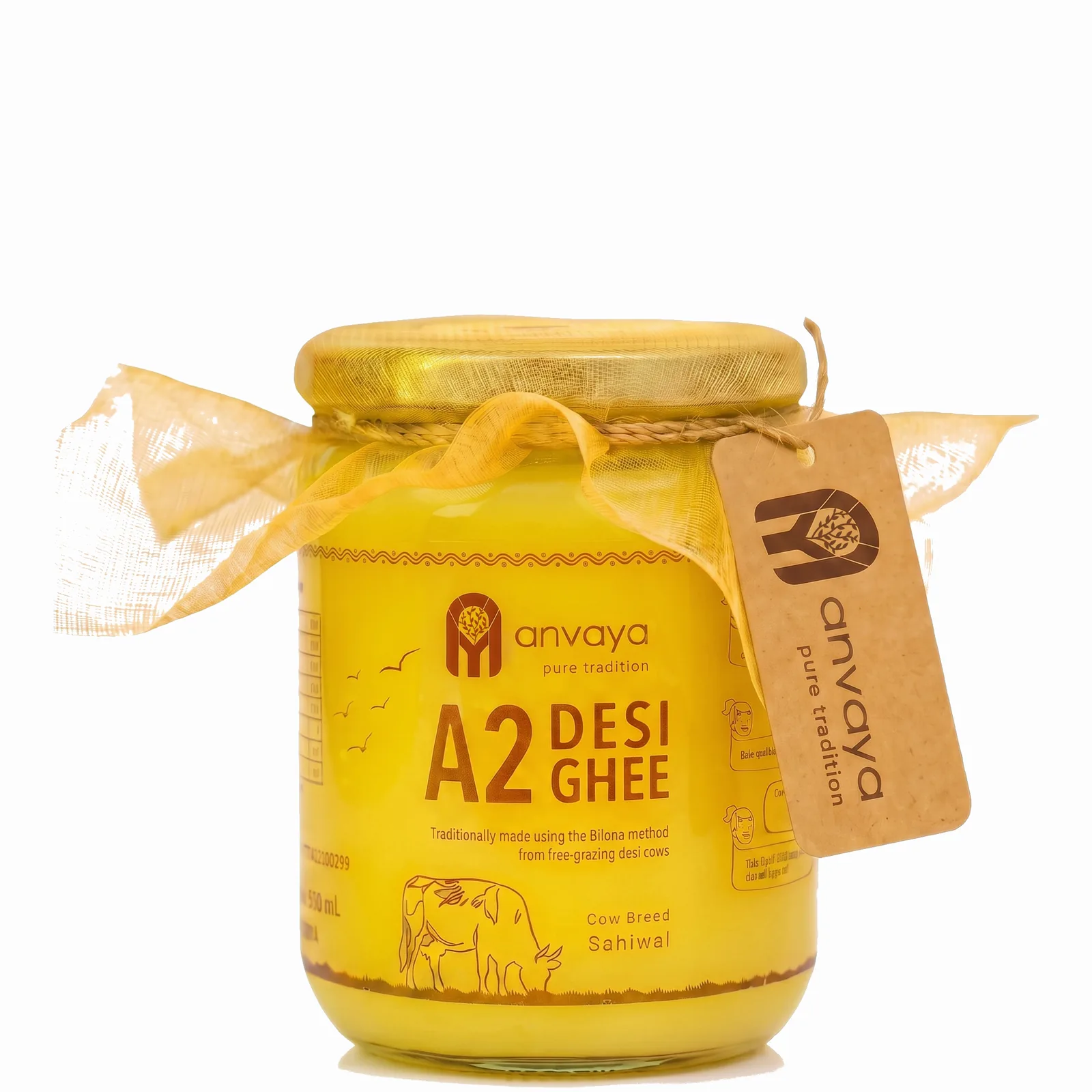
Amber glass with UV protection costs several times what a plastic jar costs, and it is heavier to ship. Light and heat are what turn a good fat rancid. Plastic is cheaper for us and worse for the ghee.
What that adds up to
Our 500 ml jar is ₹1,500 before GST (₹1,575 with it). A litre is ₹2,800 before GST (₹2,940 with it), which works out cheaper per millilitre, and most regular customers move to the litre after the first jar.
Supermarket ghee at ₹600 a kilo is not a scam. It is a different product made a different way, at a scale we cannot reach and would not want to. If the price gap seems large, it is because the two things are further apart than the shelf suggests.
A worked example
Say we take 30 litres of Sahiwal milk to make one kilo of ghee.
At farm-gate rates for A2 milk from a native breed, that milk alone costs several times what 20 litres of pooled crossbred milk costs a commercial dairy. Then add the churning labour, an early morning per batch. Then wood for the fire. Then the amber glass, the carton, and the courier. Then the lab panel, spread across the batches it covers.
The jar you receive is what is left after all of that, sold direct with no retailer in between. When you see A2 bilona ghee at ₹900 a kilo, one of those lines has been cut. Usually it is the milk, sometimes it is the method, occasionally it is the truth on the label.
Seasonality
Our price does not move with the season, but the ghee does. Green fodder in the monsoon and winter gives a deeper yellow and a stronger smell. Summer ghee is paler.
Yield drops in the hot months, which is when a farm that buys milk in quietly tops up from the open market. We do not have that option, because we only use our own. Some months we simply make less.
Where the money does not go
We have no retail markup, because we sell direct. No distributor, no modern trade listing fee, no shelf slotting. We have never paid for a celebrity endorsement and we do not run influencer barter.
We do pay for shipping, and orders above ₹3,000 ship free. Below that it is ₹100.
What we would cut first
If we had to bring the price down, the lab panel would be the tempting thing to drop, because nobody would notice for a year. We are not going to, for the obvious reason that it is the only part of this page you can independently verify.
The glass would be next, and plastic would save real money per unit. It would also let light at the fat, and a customer would open a jar in month five and find it stale.
Neither is a saving. Both are a transfer of cost from us to you, paid later.
Is it worth it for you
If you use ghee once a week, honestly, probably not. Buy something reasonable and spend the difference on better dal.
If ghee is in your daily cooking, if you make halwa and want it grainy, or if you have stopped trusting what the label says, then yes. Start with the 500 ml jar rather than the litre. Cook with it for two weeks. If your kitchen does not smell different, tell us and we will refund it.
That is a better test than anything we could write here.
More: A2 ghee vs regular ghee, or how to test ghee purity at home.
Umesh Pratap Verma
Founder, Anvayapure
Founder of Anvayapure. Custodian of Ma Sumitra Devi Goshala in Uttar Pradesh, and the man who insisted on Sahiwal Bilona over shortcuts.