Bilona Ghee vs Commercial Ghee
Bilona ghee is churned from curd. Commercial ghee is usually spun from cream. That single difference upstream is what you taste in the jar.
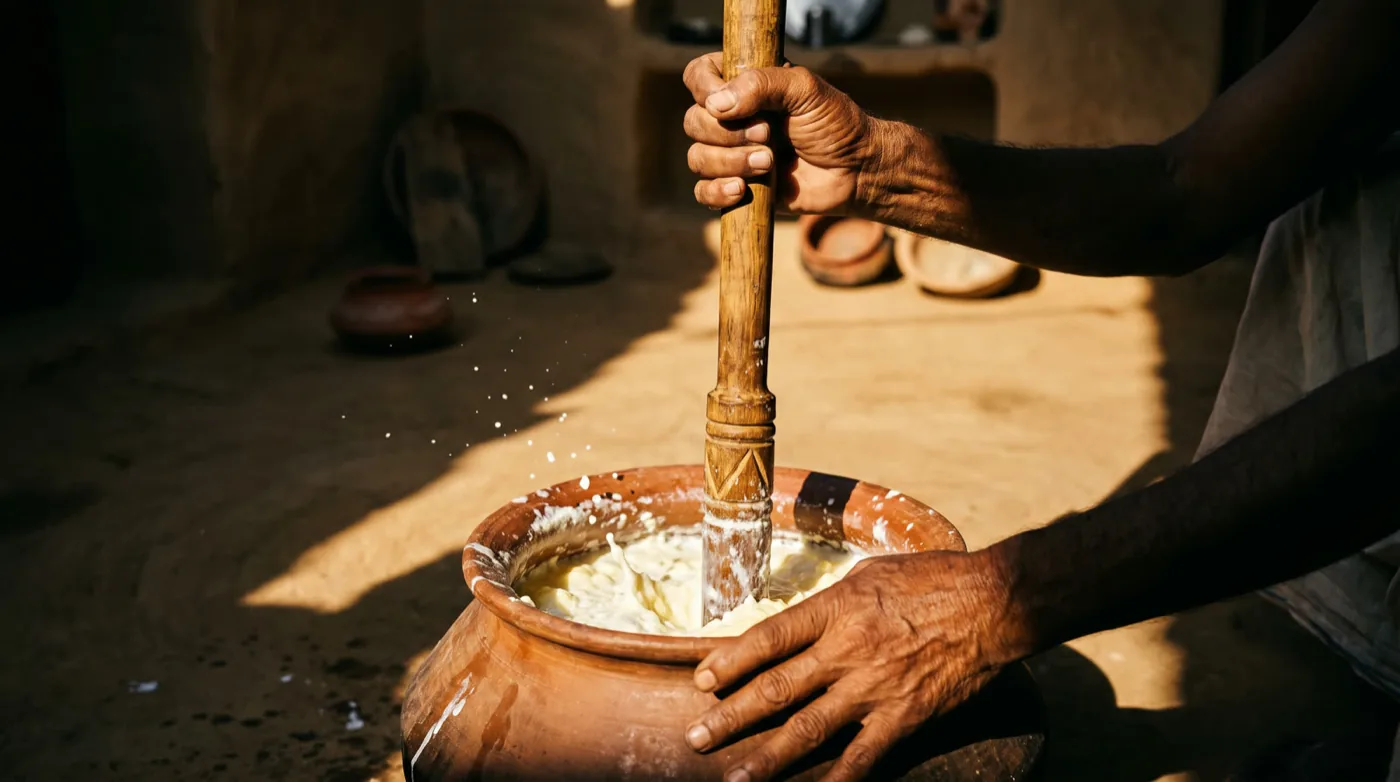
Bilona ghee is churned from curd. Commercial ghee is almost always spun from cream. Everything else people argue about follows from that one fork in the process, which happens before any heat is applied and cannot be corrected later.
Set the milk into curd, churn it, and the butter you get carries the smell of fermentation. Spin cream out of milk in a centrifuge and you skip that step entirely. Both end up as ghee. They do not taste the same.
The bilona route
Milk goes in warm and is set into curd overnight with a spoon of the previous day's curd as starter. That is a fermentation, and it takes the time it takes.
The set curd is churned with a wooden bilona, a shaft worked back and forth so it turns first one way then the other. Butter gathers at the top. Buttermilk stays below and gets drunk or cooked with, because at this scale nothing is thrown away.
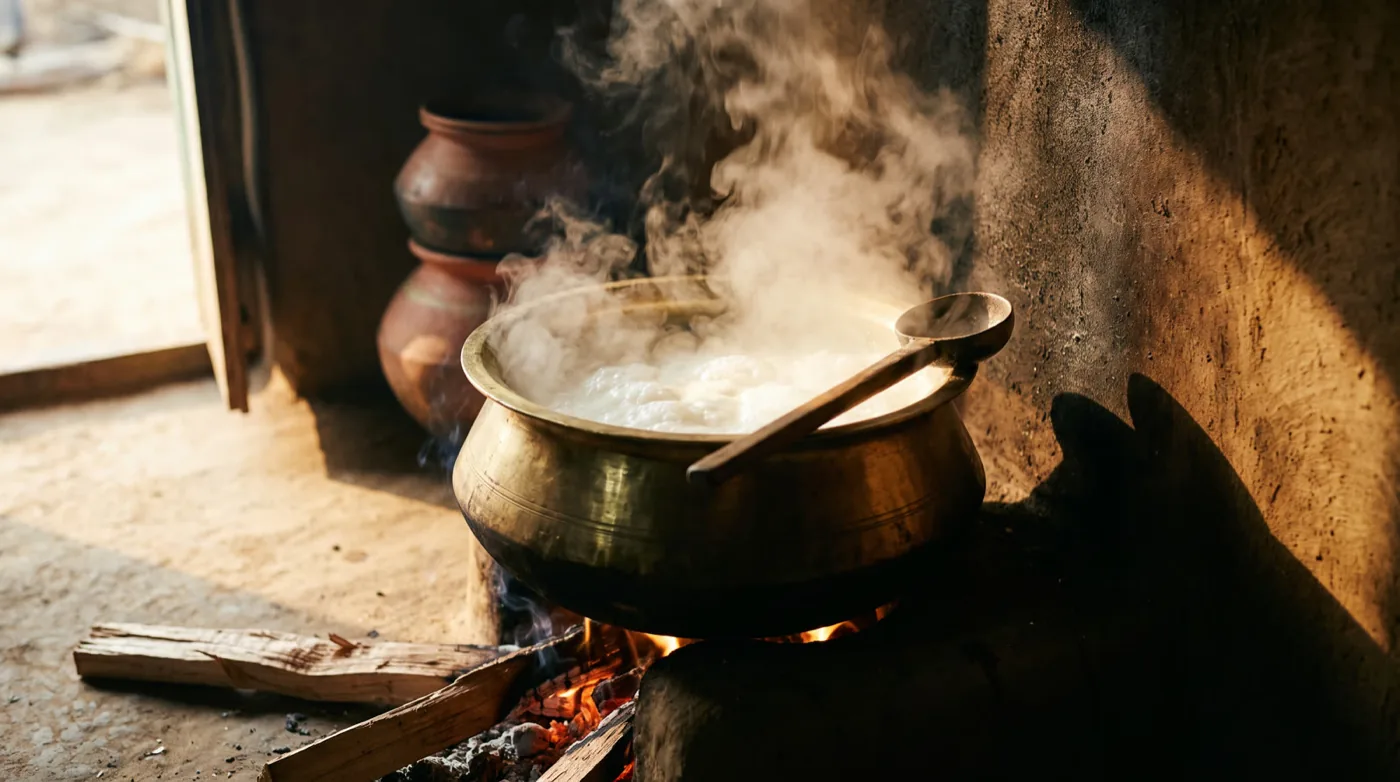
The butter is then cooked slowly until the water boils off and the milk solids drop and brown. On a wood fire that takes a while and needs watching. Pull it early and it tastes flat. Take it too far and it tastes burnt.
Then it is left to cool on its own. This last part is where the grain comes from.
The commercial route
Industrial production starts from cream, separated mechanically from milk. No curd, no fermentation, no waiting overnight.
Cream is heated directly to butter and then to ghee, usually in a continuous system running at higher temperatures because throughput is the point. It is efficient, and it is not dishonest. It is simply a different product from the one the word bilona describes.
The finished ghee is often cooled quickly, which is why it sets smooth.
What the slow cook is doing
The cook is not only about driving off water. As the milk solids settle and brown, they throw off the nutty smell people associate with good ghee. That browning is a Maillard reaction, the same one behind toast and seared meat, and like all Maillard reactions it needs both time and a temperature held in a narrow band.
Rush it and you get a pale ghee that smells of butter rather than of ghee. Hold it too long and the solids go past brown into bitter, and there is no recovering the batch.
A wood fire makes this harder rather than easier. The heat moves, so the pot needs watching and the flame needs managing. Nobody would choose it for consistency. It is chosen because of what it does to the finished smell, and because it is how the method has always been run.
Then the cooling. Ghee left to come down to room temperature on its own crystallises coarsely, and those crystals are the grain. Chill it fast and the crystals stay too small to see. This is the last step and the one most often skipped, because cooling slowly means the vessel is tied up for hours.
What actually differs
| Aspect | Bilona ghee | Commercial ghee |
|---|---|---|
| Starting material | Curd, churned | Cream, or butter bought in |
| Fermentation step | Yes, overnight | None |
| Aroma | Pronounced, slightly sour at the edge | Mild or flat |
| Texture | Grainy when set | Usually smooth |
| Batch size | Small, watched by hand | Continuous |
| Yield per litre of milk | Lower | Higher |
Yield is the line that explains the price. Curd churning gives you less ghee from the same milk than centrifugal separation does. Add the overnight set, the hand churning and the slow cook, and the cost per jar goes up for reasons that have nothing to do with marketing.
How to tell them apart at home
Look at the set ghee first. Grain is the most reliable everyday signal. Danedar ghee shows visible crystals when it has cooled slowly, a bit like coarse sugar suspended in the fat. Smooth ghee is not automatically fake, because cooling conditions vary, but grain is hard to fake in the other direction.
Then smell it cold. Bilona ghee carries the curd behind it. There is a faint sourness under the sweetness. Cream ghee smells cleaner and simpler.
Then heat a little in a pan. Good ghee smells nutty within seconds and does not spit, because there is no water left in it.
Colour tells you less than people think. It follows the feed and the season more than the method, and it can be adjusted.
The claim to be careful with
You will see it said that bilona ghee retains probiotics from the curd. It does not. Cooking butter to ghee takes it well past the point any live culture survives, and the milk solids that carried them are strained out at the end. What the curd stage leaves behind is aroma and flavour compounds, which is a real difference and enough of one. It does not need embellishing.
Similar caution applies to nutrient comparisons. Both products are around 99 per cent fat with a very similar fatty acid profile. The honest case for bilona is taste, texture and how it was made, not a nutritional gap that nobody has measured.
What to ask a seller
Ask whether the ghee is churned from curd or made from cream. A brand doing the slow version will answer immediately and in those words.
Ask which breed the milk came from.
Ask for the lab report rather than the phrase lab tested. There is a wide gap between a brand that has a report and a brand that has a claim.
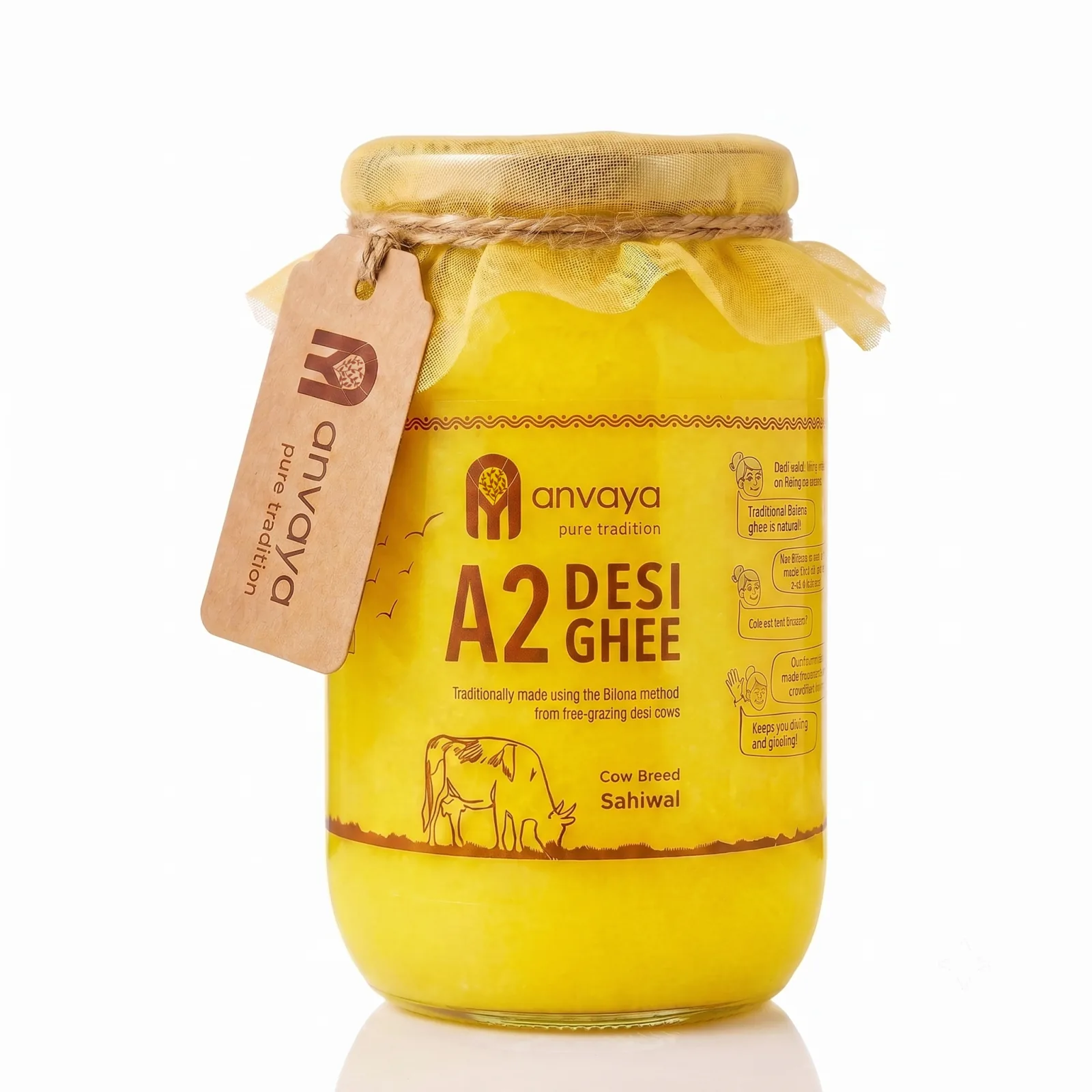
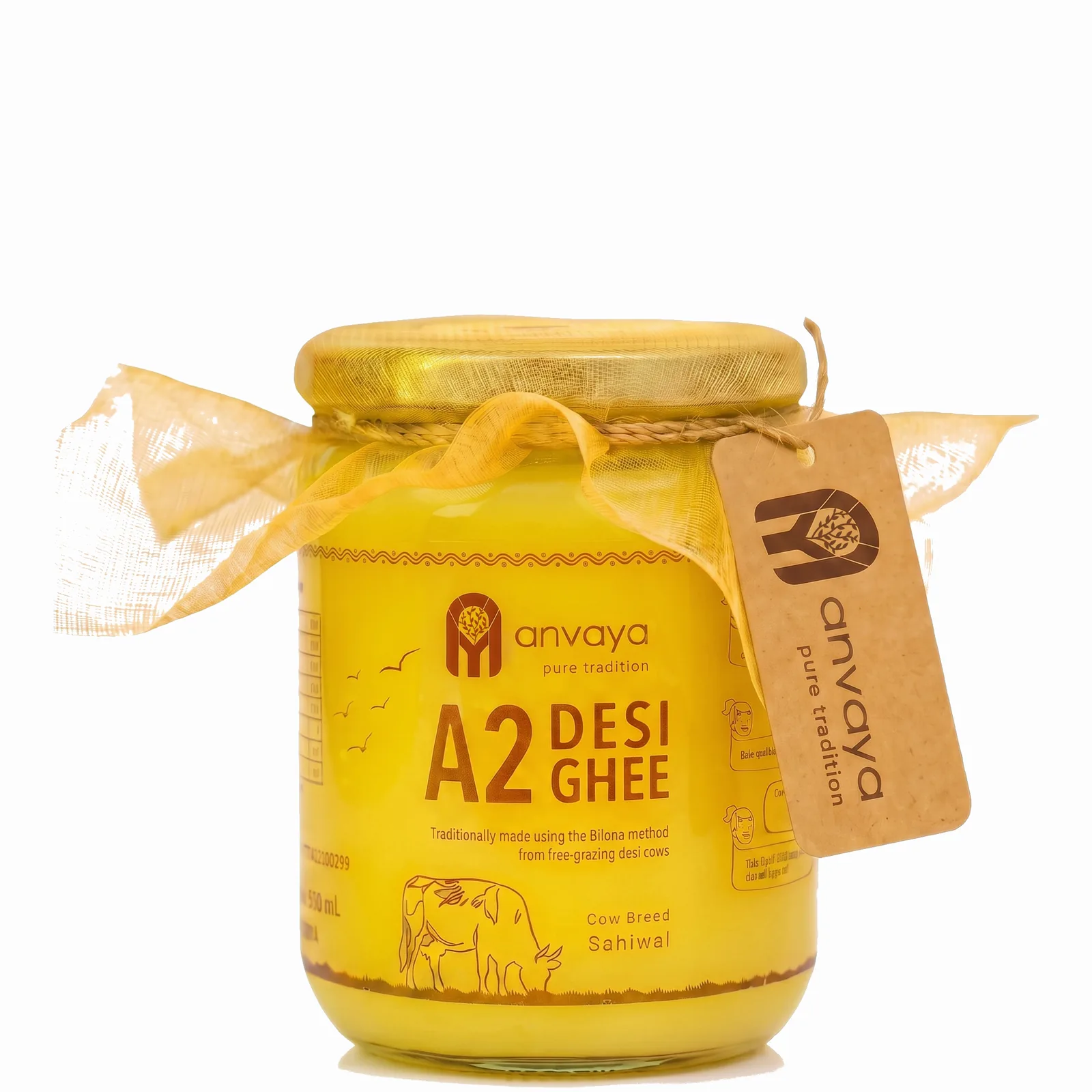
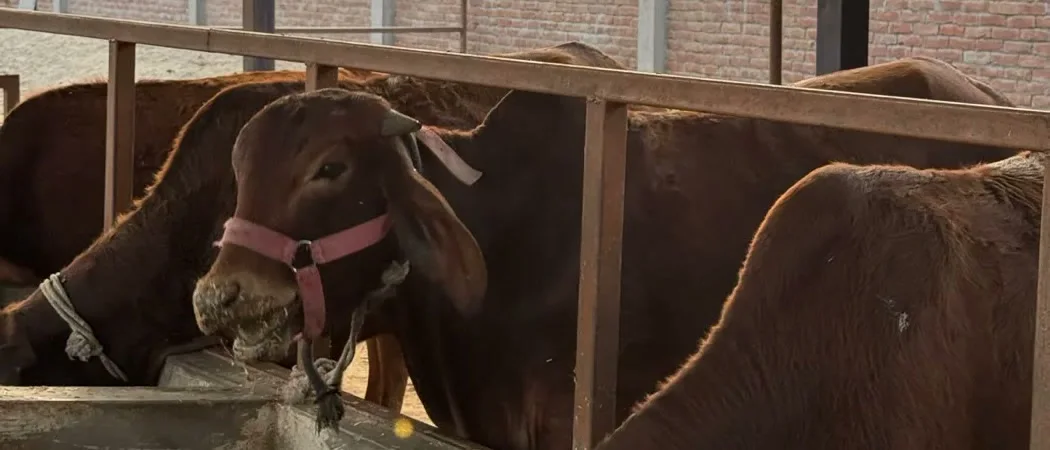
Ours is Sahiwal milk, set into curd, churned in a wooden bilona and cooked on a wood fire, and the test reports are published in full on our Lab Reports page.
Umesh Pratap Verma
Founder, Anvayapure
Founder of Anvayapure. Custodian of Ma Sumitra Devi Goshala in Uttar Pradesh, and the man who insisted on Sahiwal Bilona over shortcuts.