Kachi Ghani Mustard Oil Price, Explained
The arithmetic behind a litre of slow-pressed mustard oil. Seed, press time, the lab bill, and why a cheap litre cannot be what its label says.
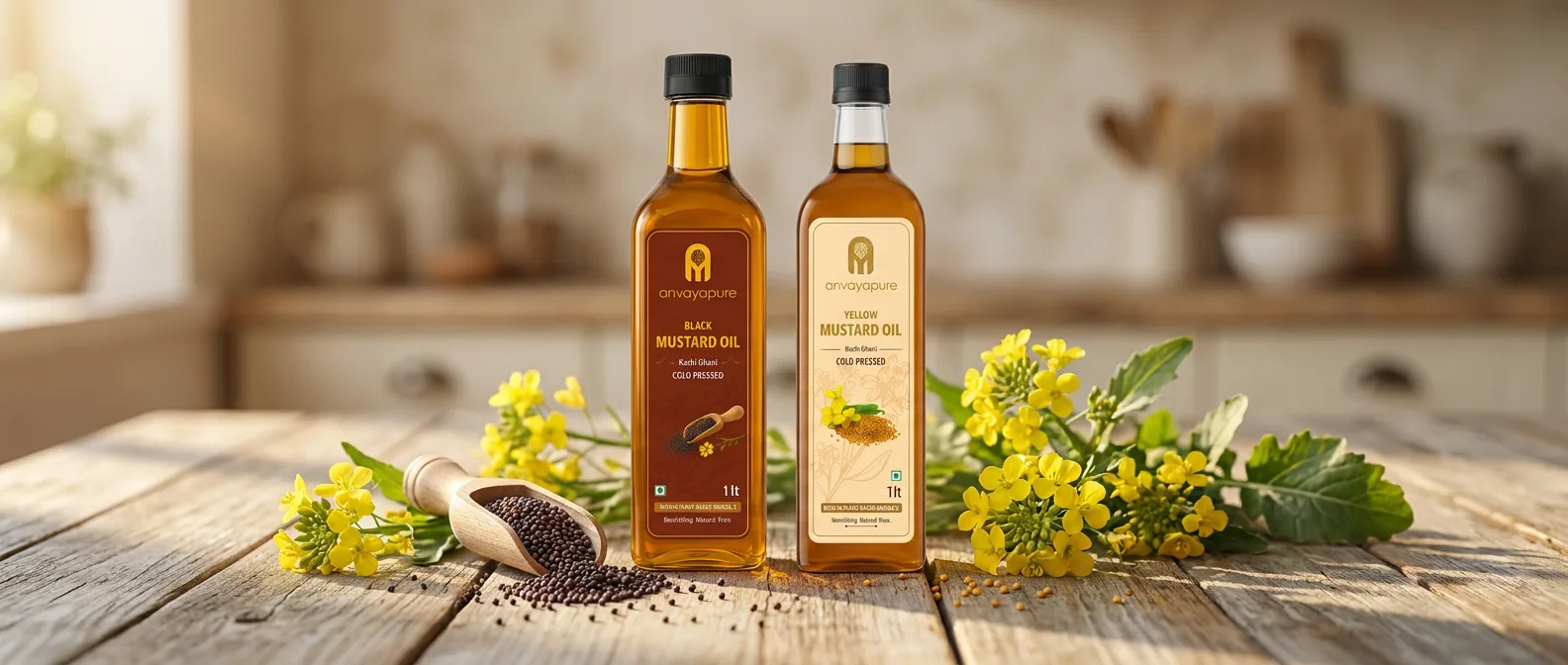
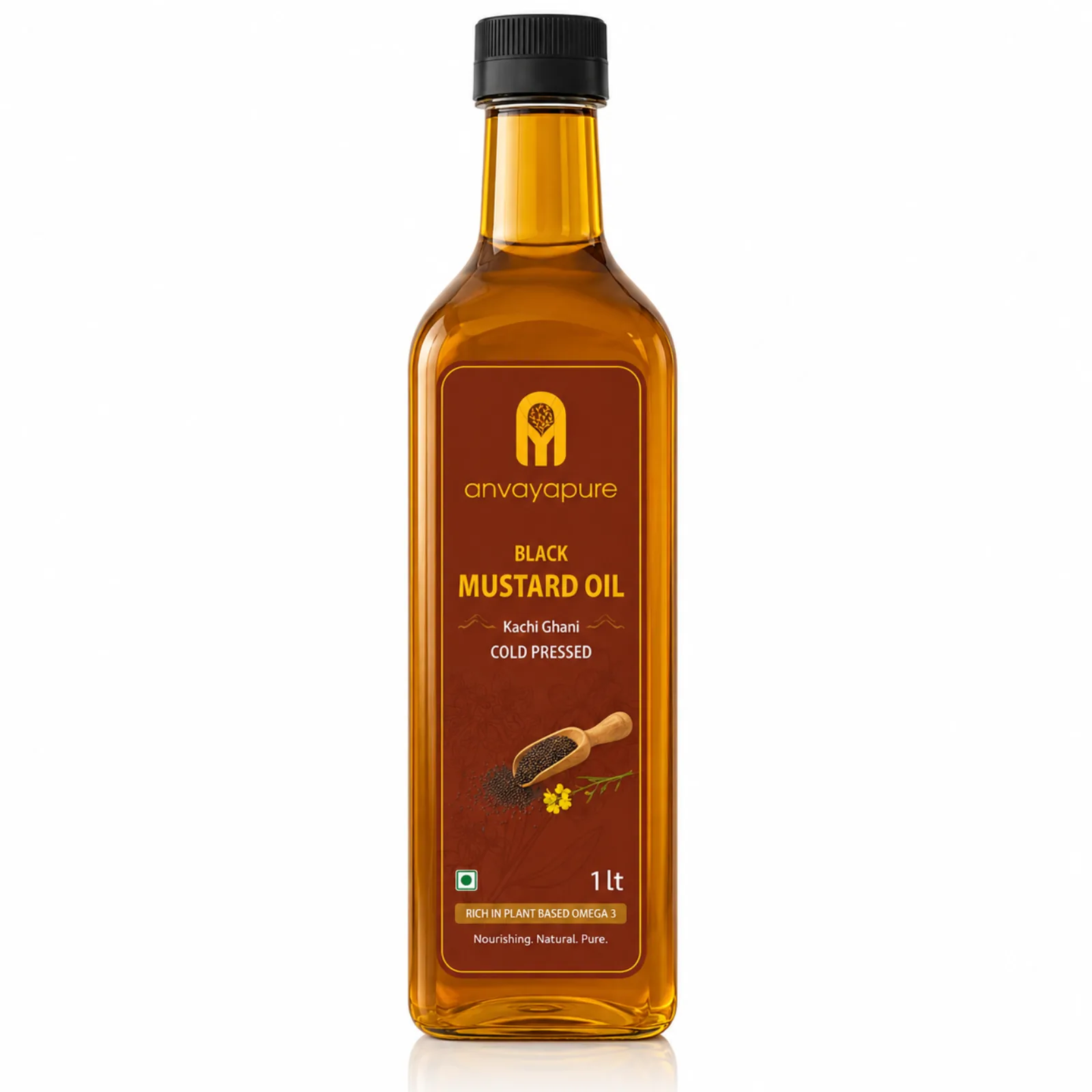
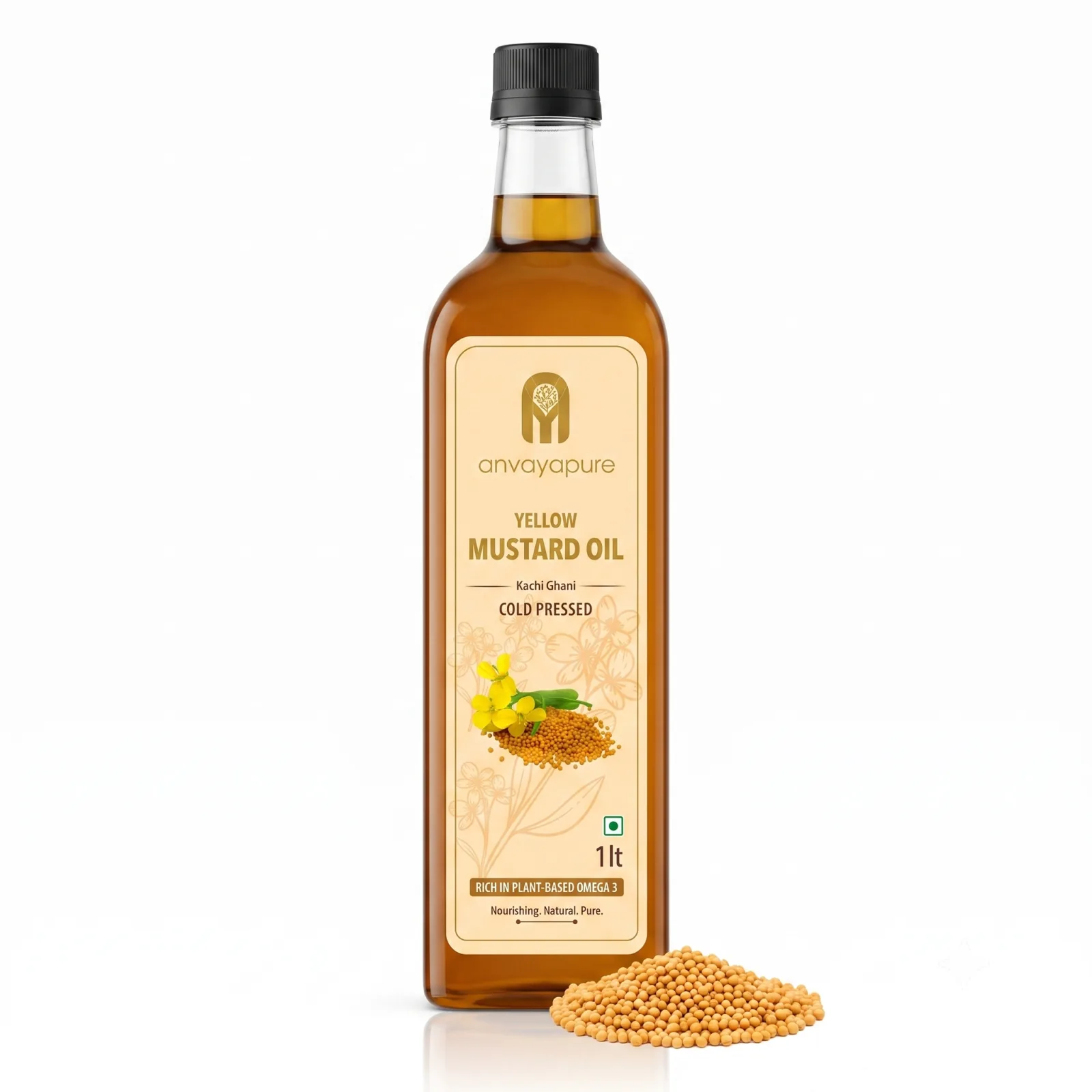
A litre of our black mustard oil is ₹450. A supermarket litre with kachi ghani printed on the label can sell for well under ₹250. Both bottles say cold pressed. They cannot both be telling the whole story, and the difference is easiest to see as arithmetic.
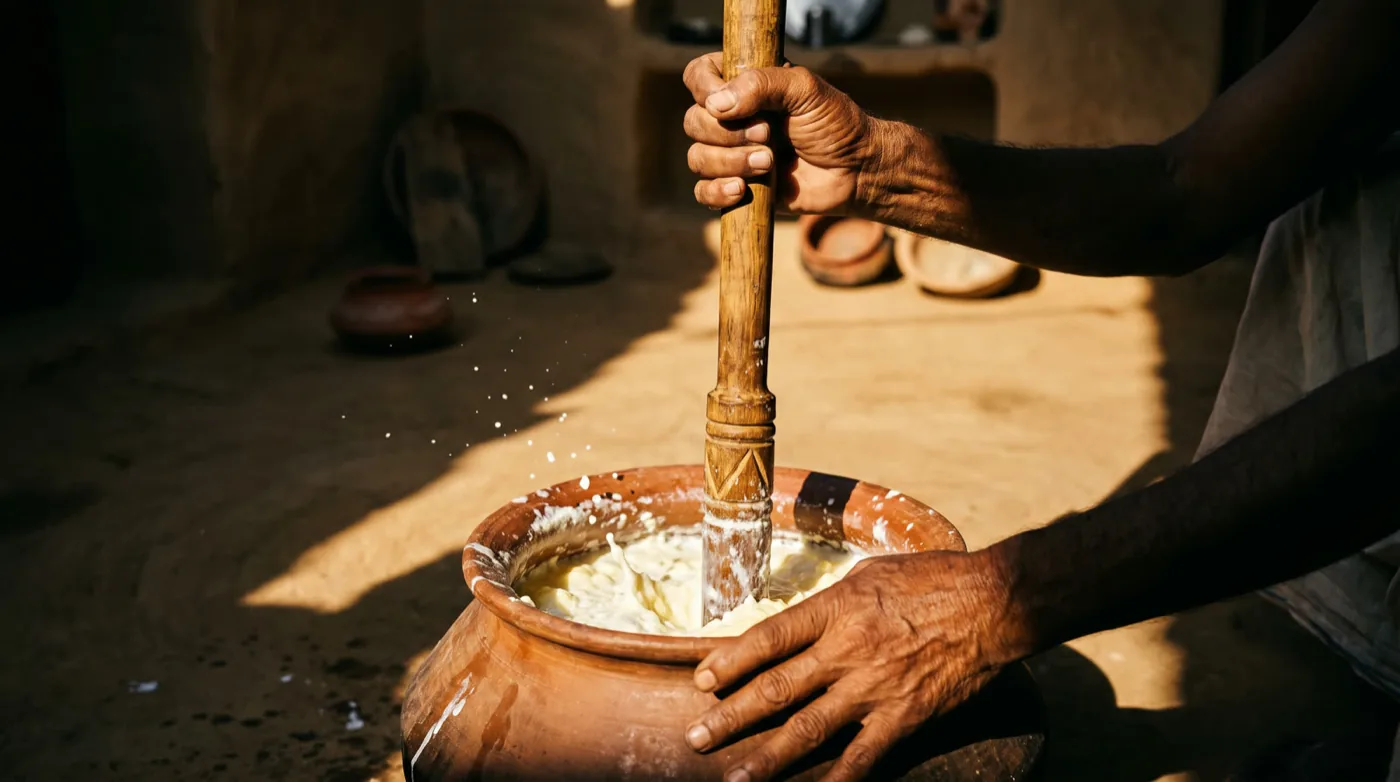
In the Hindi belt nobody says cold pressed. It is simply kachi ghani ka tel, the oil from the raw press. The name describes a method: mustard seed crushed slowly in a ghani, without heat, without solvents, so the pungency and the nutrients stay in the oil instead of being boiled or bleached out of it.
Here is the sum, written out.
Start with the seed
Mustard seed trades at roughly ₹55 to ₹65 a kilo at the mandi in a normal season. A slow press recovers only part of the oil the seed holds; as a working figure, it takes about three kilos of seed to fill one litre bottle.
Three kilos at mandi rates is around ₹180 of seed before anything has been pressed, filtered, bottled or shipped.
Hold that number against a retail litre priced under ₹250. After the shop's margin, the bottle, the cap, the label and the freight, there is almost nothing left for the seed itself, let alone a slow press. The arithmetic only works if the oil was extracted some cheaper way: solvent plants that strip nearly everything out of the seed, expeller lines that run hot and fast, or blending. The label may still say kachi ghani. The price says otherwise.
Then the press
A wooden ghani is slow on purpose. Slow keeps the temperature down, and low temperature is the entire point: it is what keeps the mustard's sharpness, colour and omega fats intact. You can read the full comparison in our guide to cold-pressed versus refined oil.
Slow also means small batches and a person watching them. A solvent plant processes in hours what a ghani presses in days. That gap is labour, and it is in the price.
Then the lab
We pay a NABL-accredited lab to test what we press, and we publish what it finds, openly, on our lab reports page. Testing costs money per sample. A brand that never tests, or tests and never shows you, does not carry that cost.
What that adds up to
Seed at market rate, a press that runs slow, a person running it, and a lab bill with a published report. That is why our black mustard oil is ₹450 a litre and our yellow mustard oil is ₹490, and why we would rather explain the price than quietly match one the arithmetic cannot support.
If a litre of kachi ghani costs less than the seed inside it should, one of the words on the label is doing work it has not earned. Browse both oils here, and check the report before you buy, ours included.
Umesh Pratap Verma
Founder, Anvayapure
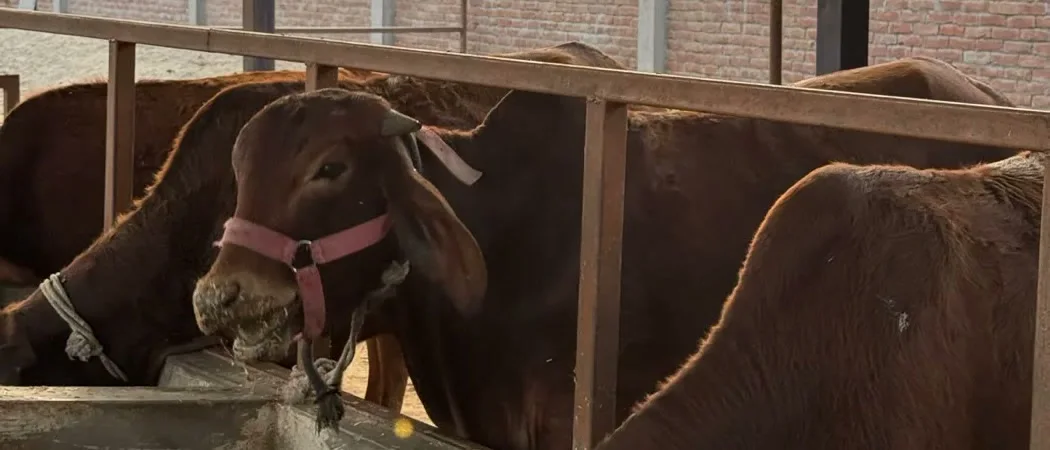
Founder of Anvayapure. Custodian of Ma Sumitra Devi Goshala in Uttar Pradesh, and the man who insisted on Sahiwal Bilona over shortcuts.