How to Test Ghee Purity at Home
Five kitchen tests that tell you whether your ghee is what the label says. Do them on our ghee too.

Melt a spoon of ghee in your palm. Real ghee goes liquid in under a minute from body heat alone and stays clear. If it sits there waxy, or turns cloudy and greasy, something else is in the jar. That is the fastest test, and you can do it before you finish reading this page.
Here are five tests worth knowing. None of them needs equipment you do not already own.
The palm test
Put half a teaspoon on your palm and leave it. Do not rub. Ghee melts at around 32 to 35 degrees, so your hand is warm enough. Pure ghee turns to clear golden liquid and smells nutty. Vanaspati and palm-oil blends melt slower, hold their shape longer, and leave a film that feels like candle wax.
This test catches the crudest adulteration. It will not catch a careful blend.
The heat test
Take a spoon of ghee into a steel pan on low flame. Real ghee melts almost at once, goes a light brown, and throws a strong roasted smell across the kitchen. Adulterated ghee behaves differently. It may separate into layers, or foam, or leave a sticky residue at the bottom that does not lift when you tilt the pan.
Watch the smell more than the colour. A jar with no aroma when heated is telling you something.
The fridge test
Put a small bowl in the fridge for half an hour. Pure ghee sets evenly, one colour throughout. Blended ghee sets in layers, because the fats in it have different melting points. You will see a paler band sitting over a darker one, or a soft centre in a hard shell.
This is the test most people find convincing, because the layers are hard to argue with.
The iodine test
If you have tincture of iodine in the house, put two drops into a teaspoon of melted ghee. No colour change means no starch. If it turns blue or purple, someone has bulked the jar with boiled potato or arrowroot. It happens more than you would like.
The paper test
Rub a drop on a plain sheet of paper and leave it for fifteen minutes. Ghee leaves a translucent mark that thins out. Vegetable oil leaves a heavy stain that stays wet at the edges.
What these tests cannot tell you
They catch bulk adulteration. Vanaspati, starch, cheap vegetable oil. They do not tell you the cow breed, whether the ghee came from curd or from cream, or whether the milk had antibiotic residue in it. No kitchen test does.
For that you need a lab. The instrument tests are what separate real dairy ghee from a good imitation, and they cost money to run. That is why most brands do not publish them.
There is also a limit to what any single test proves. A jar can pass the palm test and still have been made from cream rather than curd, or from crossbred milk rather than a native breed. Those are questions about how the ghee was made and where the milk came from, and the only honest answer to them is a farm that will tell you, in writing, and keep saying the same thing when you ask again.
Do these tests on our ghee
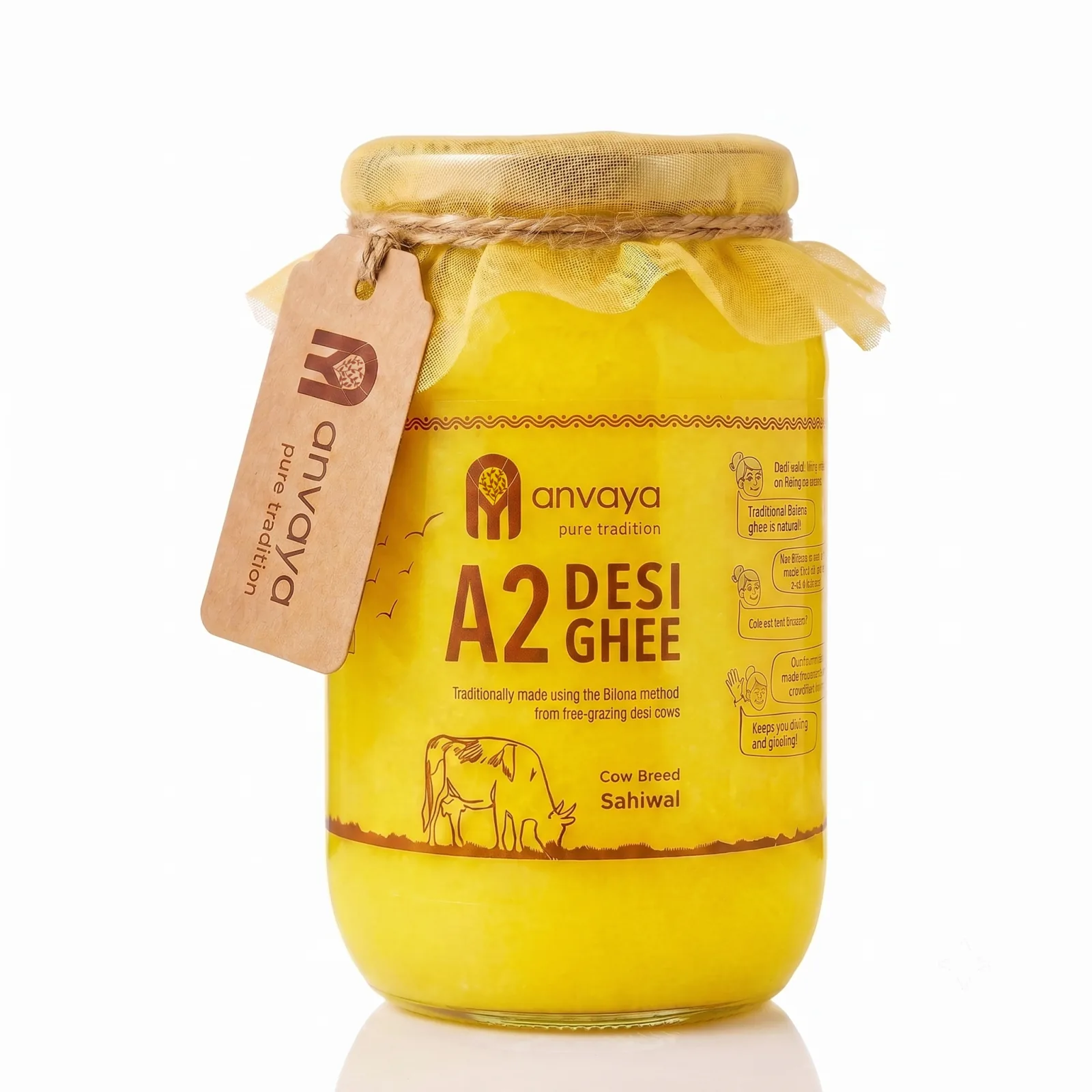
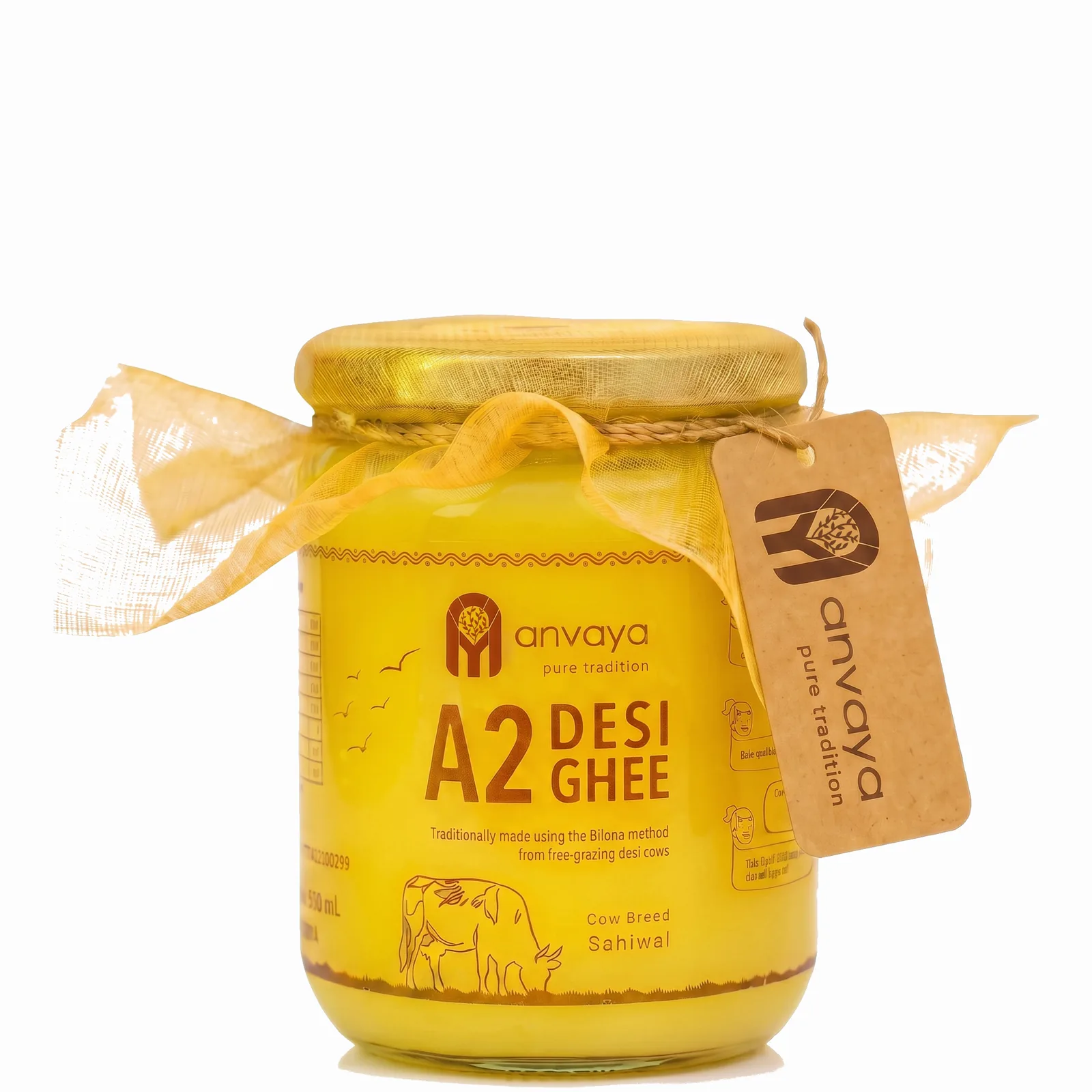
We would rather you tested it than took our word. Our ghee is grainy, sets evenly, melts on the palm in about forty seconds, and smells of wood fire when it is heated. If a jar of ours fails any test above, photograph it and send it to us.
We also send samples to a NABL-accredited food-testing lab at regular intervals and publish the report. Not a summary of the report. The actual PDF, with the values on it. The QR on the jar takes you to the latest one, and every report is on the lab reports page.
A note on labels
FSSAI rules mean the jar has to carry a licence number. Ours is 12724025000299. A licence number tells you a business is registered and inspectable. It does not tell you the ghee is good, and any brand can print one. Treat it as the floor, not the ceiling.
The word "pure" on a label means nothing on its own. It is not a regulated term in the way "organic" is. When we use it, we put a report next to it. When anyone else uses it, ask what is standing behind the word.
What good ghee looks like before you test anything
Grain. Ghee that was cooked slowly and cooled slowly sets in visible granules, what people call danedar. Run a spoon through it and you should feel texture rather than a smooth paste. Fast industrial cooling gives a uniform cream, which is not adulteration, but it does tell you how it was made.
Colour. Deep gold in season, paler in winter when the green fodder thins out. A jar that is identical in colour year round has either been standardised or coloured.
Smell. Cold ghee should smell mildly of cooked milk. Warm it and it should fill the room. No smell at any temperature is the clearest warning sign there is, and it is the one most people ignore because they are looking at the jar instead of smelling it.
What to do if a jar fails
Stop using it. Keep the packaging and the batch number. You can file a complaint with your state food safety department, and FSSAI runs a public grievance portal. Adulterated ghee is a food safety offence, and it is treated as one.
If it was ours, tell us first and we will replace it or refund you within seven days of delivery.
Related reading: A2 ghee vs regular ghee and why A2 ghee costs more. Or see the ghee itself.
Umesh Pratap Verma
Founder, Anvayapure
Founder of Anvayapure. Custodian of Ma Sumitra Devi Goshala in Uttar Pradesh, and the man who insisted on Sahiwal Bilona over shortcuts.