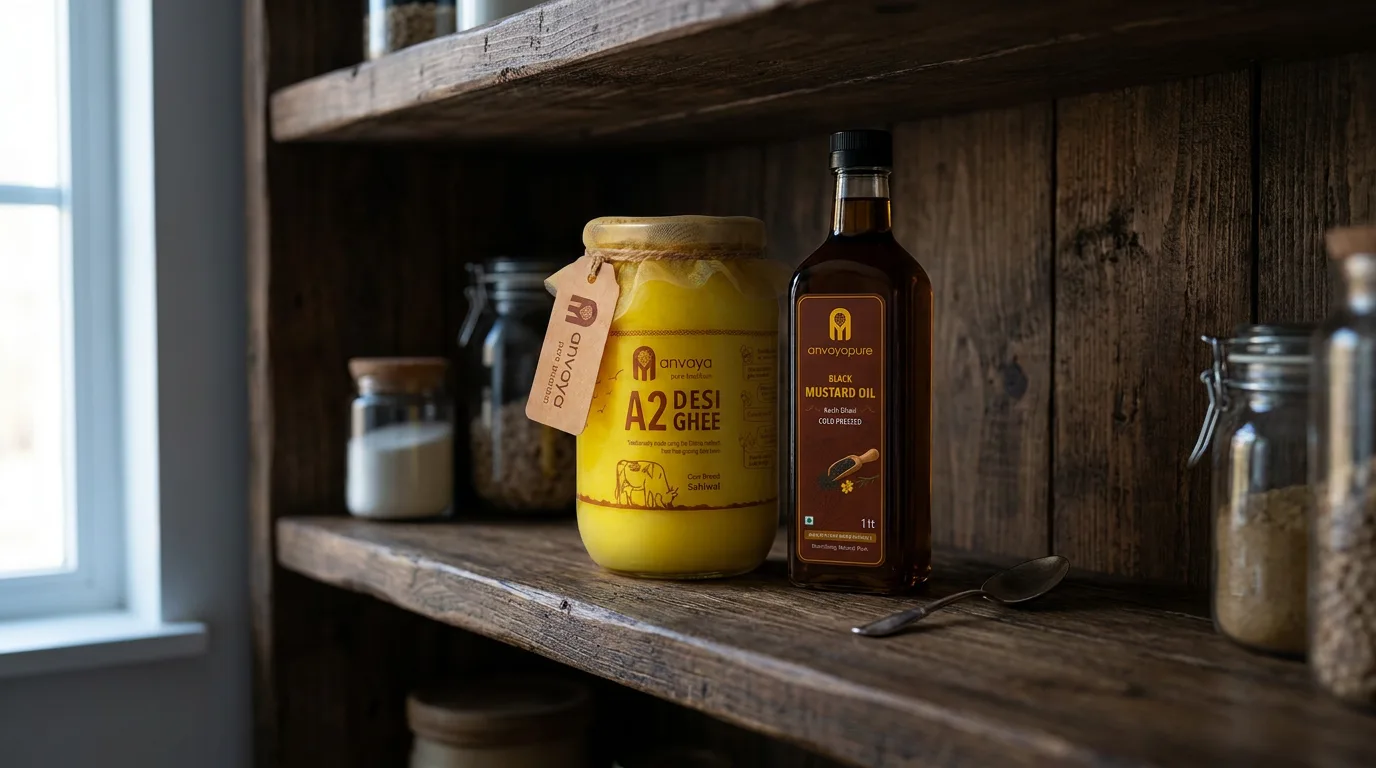
How to Cook With Mustard Oil
Heat it until the raw smell lifts, then cook. That one step is what separates good mustard oil cooking from harsh.
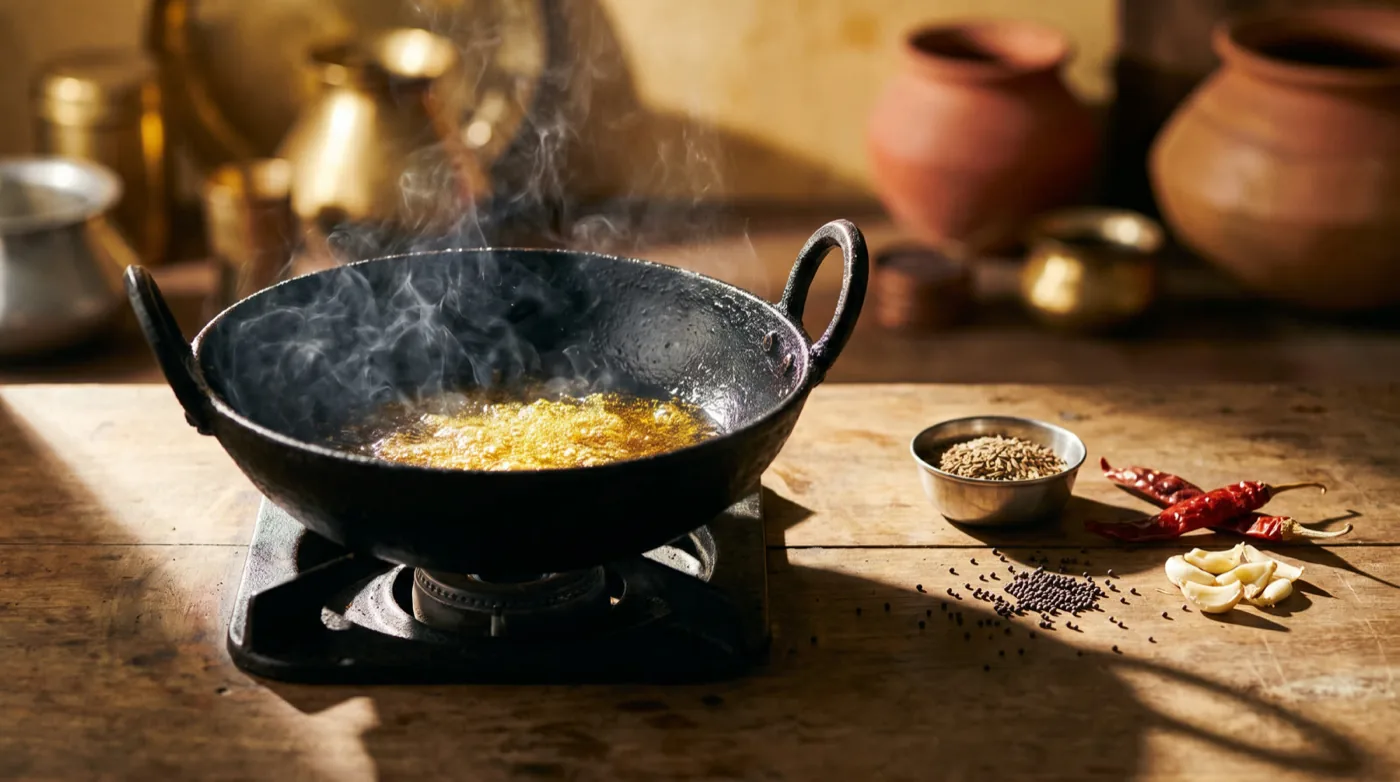
Heat the oil until the sharp raw smell lifts and it turns faintly nutty, then add your aromatics. That is the whole technique. Almost every complaint about mustard oil tasting harsh comes from skipping this step and dropping onions into cold oil.
It takes about a minute on medium heat. You will see the oil thin out and shimmer, and the smell in the kitchen will change.
Why it smells like that
Crushed mustard seed produces allyl isothiocyanate. It is the same compound that makes wasabi and horseradish burn, and it is what your nose is reacting to when you open the bottle.
Cold pressing leaves it in the oil. Refining strips it out along with most of the character, which is why refined mustard oil in a supermarket smells like nothing much. Heating breaks most of it down, which is why properly heated mustard oil tastes round rather than sharp.
If the raw smell bothers you, that is information about the oil, not a defect in it.
Smoke point
Mustard oil sits around 250 degrees, higher than most cooking oils in an Indian kitchen. That makes it stable for deep frying, which is why pakoras and fish fry so well in it.
You do not need to take it to the smoke point every time. Take it to the point where the raw smell goes. Taking oil past its smoke point repeatedly degrades it and makes food taste burnt.
Tadka
Heat the oil first. Then the whole spices, mustard seeds or jeera, and wait for them to pop. Then hing, then curry leaves if you are using them, then the aromatics. Order matters because each ingredient wants a different temperature.
For dal, a spoon of hot mustard oil tadka poured over at the end changes the whole bowl. Do it off the flame so the spices do not carry on cooking in the residual heat.
Fish
This is what black mustard oil is for. Bengali fish curry uses the oil twice, once to fry the fish and again in the gravy, and the pungency is doing structural work in the dish. A milder oil leaves the curry tasting flat.
Heat until smoking for fish. That is the one case where the higher heat is traditional and correct.
Pickles
Achaar is the one place you use mustard oil raw. Do not heat it, or heat and cool it fully, then pour it over the packed jar until the pieces are submerged.
The pungency is a preservative here. The compound that makes the oil sharp also makes the pickle keep. This is why achaar made with refined oil spoils faster and tastes thinner.
Use enough oil to cover completely. Air is what starts the mould.
Vegetables
Aloo bhaja, begun bhaja, any bhaja. Slice, salt, and fry in hot mustard oil until the edges crisp. Sarson ka saag finishes with it. Root vegetables roast well in it too, though for everyday roasting the yellow oil is easier to live with.
Black or yellow
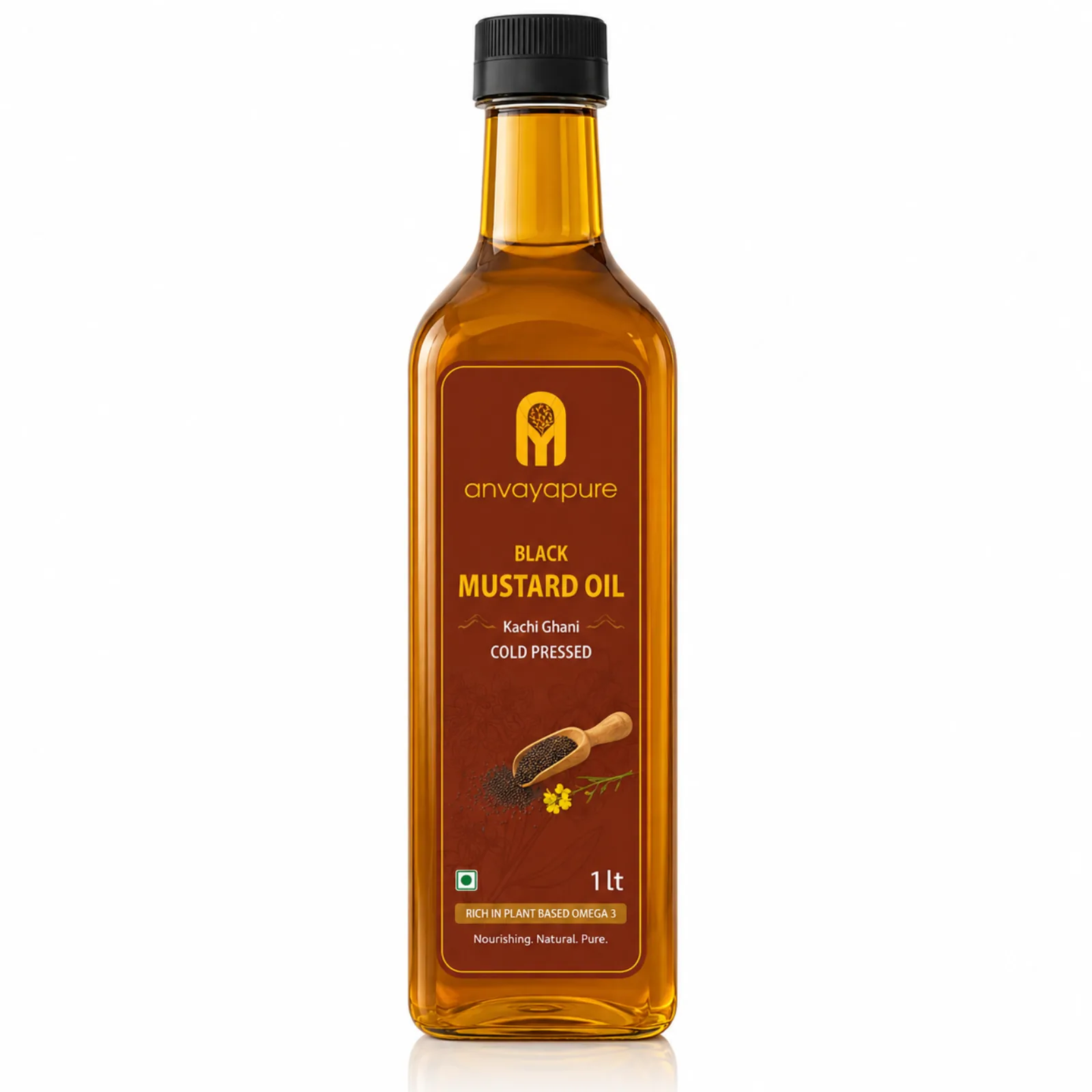
Black seed gives the sharp oil. Bengali, Bihari and eastern UP cooking assumes it, and pickling wants it.
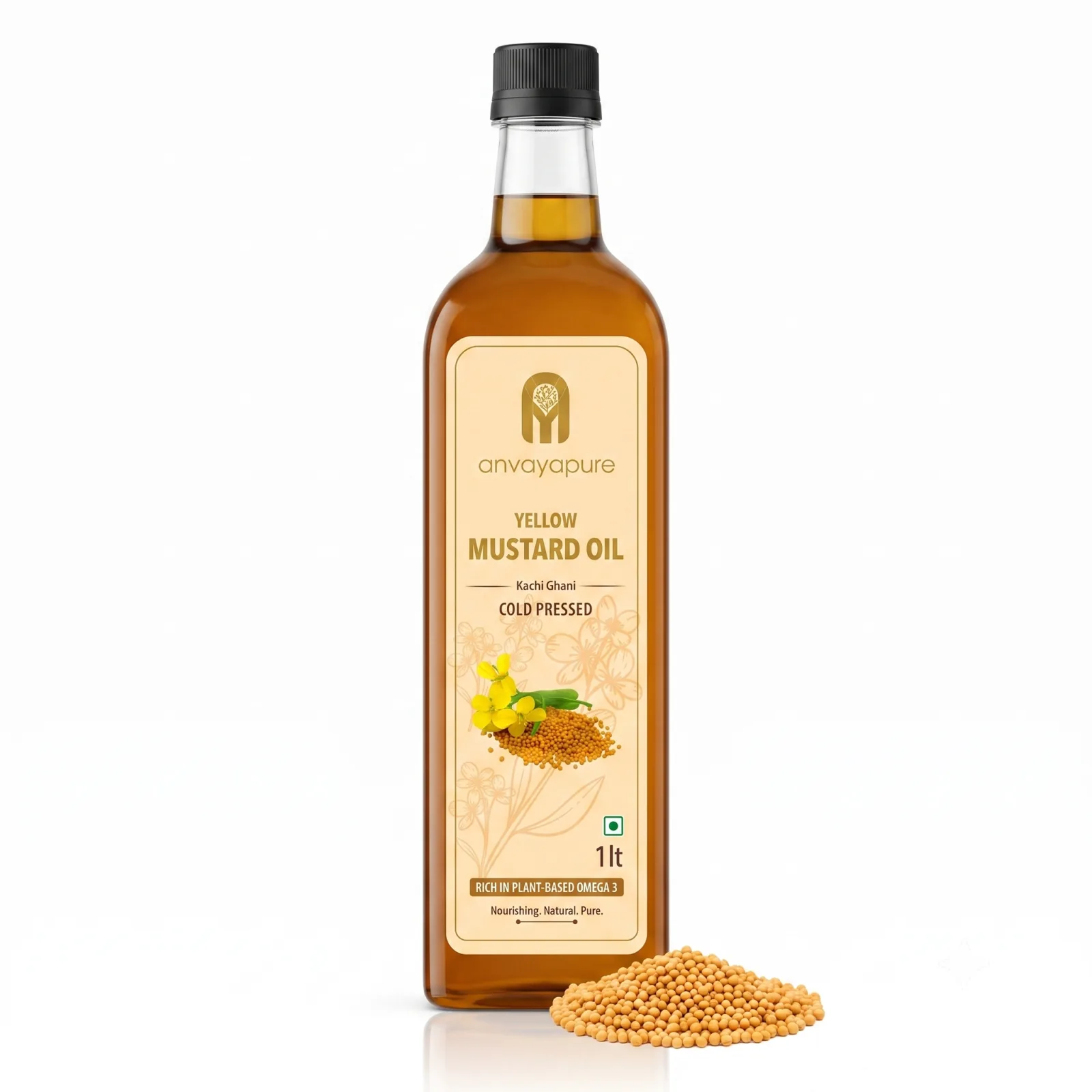
Yellow seed is milder and slightly sweet. It suits everyday sabzi, dressings, and cooking for children or elders who find black too strong. You can use it straight from the bottle in a salad, which you would not usually do with black.
We press both. If you are new to mustard oil, start with yellow.
Common mistakes
Cold oil, hot hurry. Adding onions to unheated mustard oil gives you the raw bite in the finished dish, and no amount of later cooking removes it.
Too much heat for too long. Past the smoke point the oil starts breaking down and the food picks up an acrid edge. You want shimmering, not billowing.
Reusing frying oil many times. Mustard oil takes a couple of reuses better than most, but strain it, cool it, keep it capped, and stop when it darkens or smells stale.
Treating it like a neutral oil. It is not neutral and it is not trying to be. Recipes written for sunflower oil will taste different in mustard oil, and that is usually the point.
How much to use
For a tadka on dal for four, a tablespoon is plenty. For bhaja, enough to come a third of the way up the slices. For deep frying, fill no more than half the pan, because unrefined oil foams more than refined when food goes in.
Storage
Cap tight, out of sunlight, no fridge. Amber glass is doing part of that job for you. Unrefined oil can go cloudy or thicken in a cold kitchen in December, which is normal and clears at room temperature.
Colour shifts between bottles are also normal. Unrefined oil follows the seed and the season. Refined oil looks identical every time because the colour has been processed out of it.
The label question
You may have seen bottles marked for external use only. That labelling exists because some countries restrict mustard oil for cooking on the basis of its erucic acid content, and Indian brands exporting to those markets carry the wording.
For the Indian market, mustard oil is a standard cooking oil under FSSAI rules and has been the everyday oil in half the country for generations. Our bottles are labelled for cooking and carry FSSAI licence 12724025000299.
Related: cold pressed oil vs refined oil.
Umesh Pratap Verma
Founder, Anvayapure
Founder of Anvayapure. Custodian of Ma Sumitra Devi Goshala in Uttar Pradesh, and the man who insisted on Sahiwal Bilona over shortcuts.