Cold Pressed Oil vs Refined Oil
Cold pressing squeezes oil out and stops. Refining takes that oil and strips the colour, the smell and the taste out of it with heat and solvent.
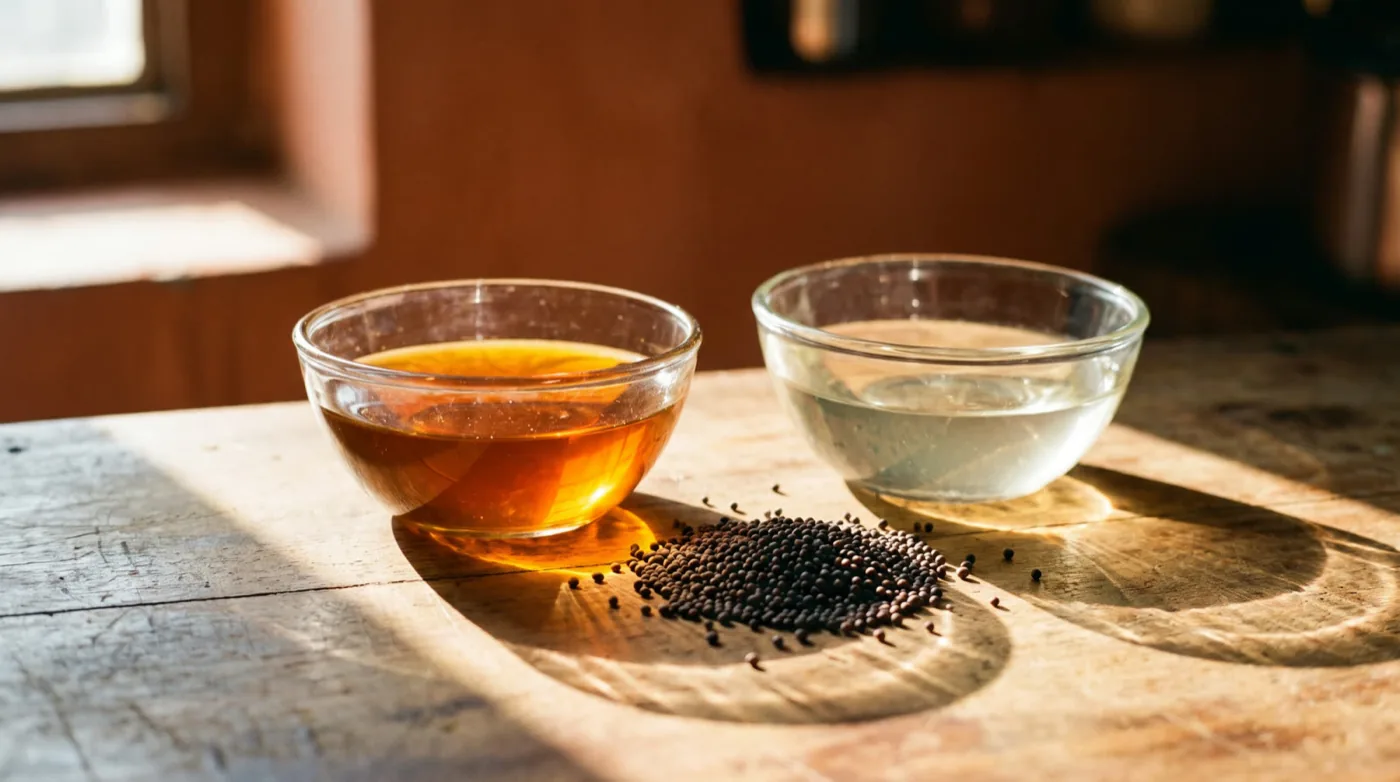
Cold pressing squeezes oil out of the seed and stops there. Refining takes that same oil and puts it through heat, solvent, caustic soda, bleaching clay and steam until the colour, the smell and the taste are gone. Both give you oil. Only one of them still tastes of the seed it came from.
That is the whole comparison. The rest of this is detail on what each step does and where it matters in an Indian kitchen.
What cold pressed means
Seed goes into a press and gets crushed. The oil that comes out is filtered and bottled. Nothing is added and nothing is taken out.
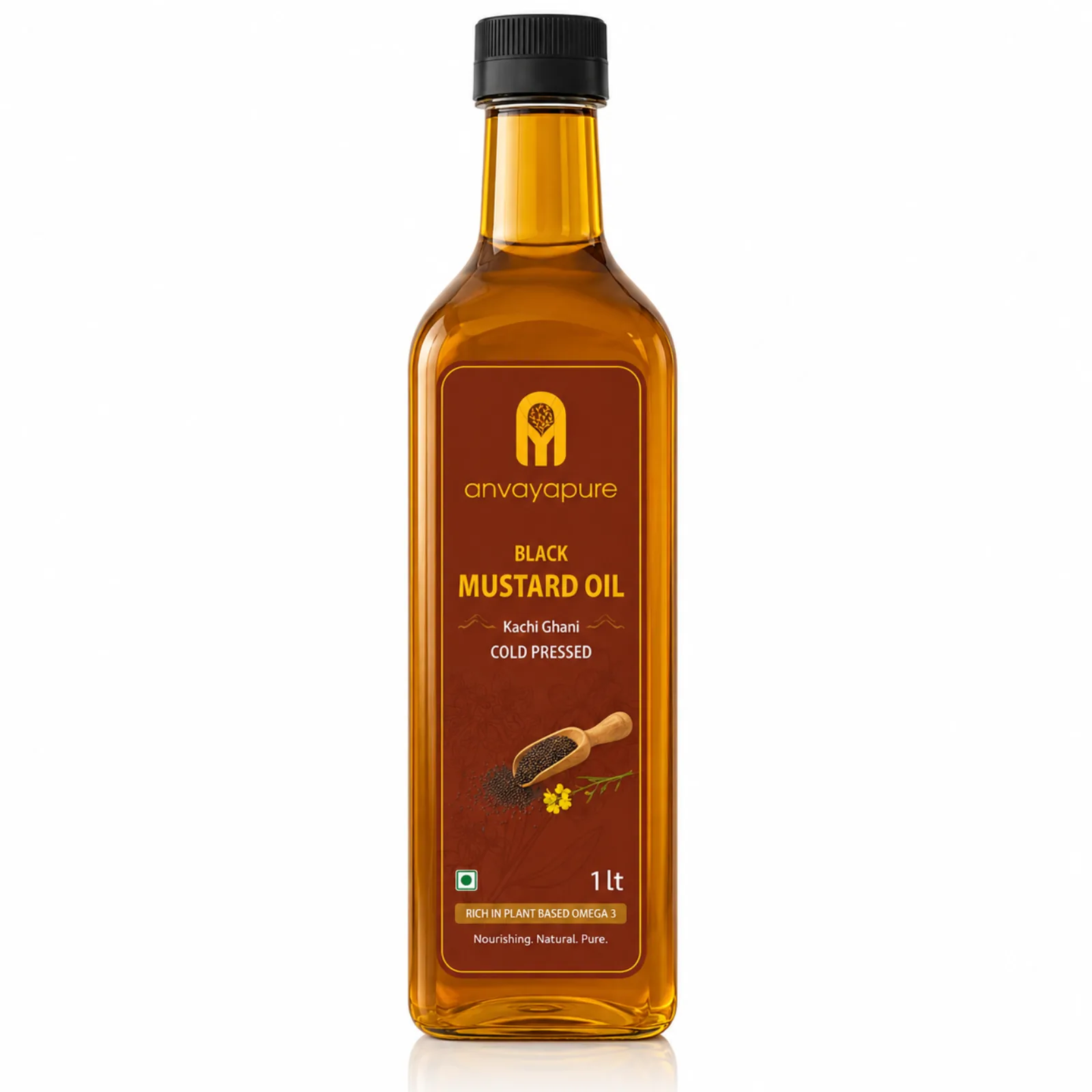
Kachi ghani is the traditional version of this, a wooden pestle turning slowly in a wooden mortar. Slow turning keeps the temperature down, which is where the word cold comes from. It is not refrigerated. It just never gets hot enough to change what is in the oil.
Because nothing is stripped, the oil keeps the compounds that give it colour, smell and pungency. It also keeps a shorter shelf life, which is the honest trade.
Ours is pressed in a wooden ghani and bottled unrefined.
What refining involves
Refined oil usually starts with expeller pressing at high pressure, which generates heat, and often a solvent wash with hexane to pull out the oil the press left behind. Then comes a sequence of corrections.
Degumming removes phospholipids. Neutralisation uses caustic soda to strip free fatty acids. Bleaching pulls out the colour with absorbent clay. Deodorisation runs high-temperature steam through the oil to remove the smell.
What comes out is pale, odourless and stable, with a long shelf life and a high smoke point. That is a genuine achievement of food engineering, and it is why refined oil is cheap and consistent. It is also why it tastes of nothing.
What you actually lose
Be careful with the claims here, because this is where oil marketing goes furthest beyond the evidence.
What refining definitely removes is the aromatic and pungent compounds, most of the colour, and a good part of the naturally occurring vitamin E and plant sterols. Some vitamin E is often added back afterwards.
What refining does not do is turn oil into poison. Refined oil is a normal food and hundreds of millions of people cook with it daily. The case for cold pressed is that it tastes like something and has been altered less, not that the alternative is dangerous.
The high-temperature steps do produce small amounts of trans fats, which is worth knowing and is a real difference. The quantities in properly refined oil are low.
Why mustard oil in particular
Mustard is the seed where the difference is most obvious, because the thing refining removes is the entire point of the oil.
Crushed mustard seed produces allyl isothiocyanate, the compound behind the sting. It is what makes your eyes prick when you open a bottle, and it is the same family of compound that gives wasabi and horseradish their bite. Deodorisation strips it out. Refined mustard oil is mustard oil with the mustard taken out.
Cold pressed mustard oil also sits at around 250 degrees before it smokes, which is high enough for deep frying. You lose very little in practical terms by cooking with the unrefined version.
The fatty acid profile is genuinely good. Mustard oil is unusually high in alpha linolenic acid, an omega-3 fat, and the ratio of omega-6 to omega-3 in it is closer to balanced than in most seed oils. This part is well documented rather than folklore.
Switching without hating it
The mistake almost everyone makes is treating it like refined oil and pouring it into a cold pan.
Heat the oil first, until the raw smell lifts and it turns faintly nutty. About a minute on medium. Then add your whole spices, then everything else. Skip that step and the food tastes harsh, and you will conclude you dislike mustard oil when what you actually dislike is raw mustard oil.
Start with dishes built for it. Bengali fish, aloo bhaja, sarson ka saag, any pickle. These recipes assume the pungency and fall apart without it.
Use less than you would of a refined oil. The flavour carries, so the same quantity reads as more.
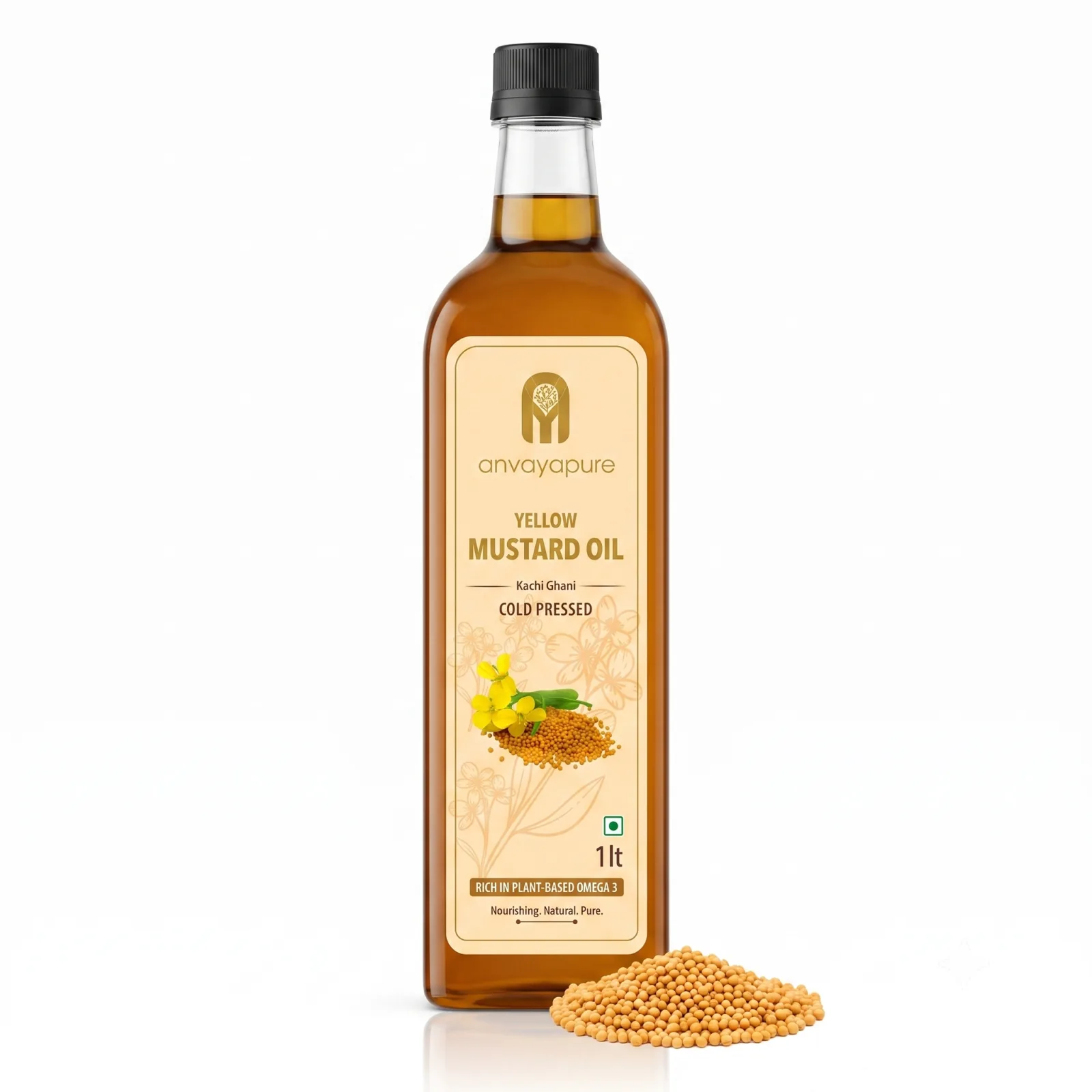
If the sharpness is still too much, yellow mustard oil is milder than black and is a reasonable place to begin.
A note on the label
Kachi ghani, cold pressed and wood pressed all point at the same idea and none of them is a protected term. Anyone can print them.
What separates a claim from a fact is a test report. Ask for one, and look at whether the brand publishes it or merely mentions it.
Storage, briefly
Unrefined oil has a shorter life because the things refining removes are also the things that go off. Ours is 9 months from the date on the bottle.
Keep it out of light, keep the cap tight, and do not decant it into a clear jar. Cloudiness in cold weather is normal and clears when it warms.
The short version
Refined oil is engineered for shelf life, neutrality and price, and it delivers all three. Cold pressed oil is the seed and nothing else, with a shorter life and a taste that shows up in the food.
For frying a thousand samosas in a shop, refined makes sense. For a home kitchen cooking food that is meant to taste of mustard, it does not.
Anvayapure Editorial
Written by the Anvayapure team, on traditional food, cooking, and wellness.