How to Store Ghee and Mustard Oil
A dry spoon and a closed cupboard will do most of the work. Ghee does not need a fridge, and mustard oil mainly needs to be kept out of the light.
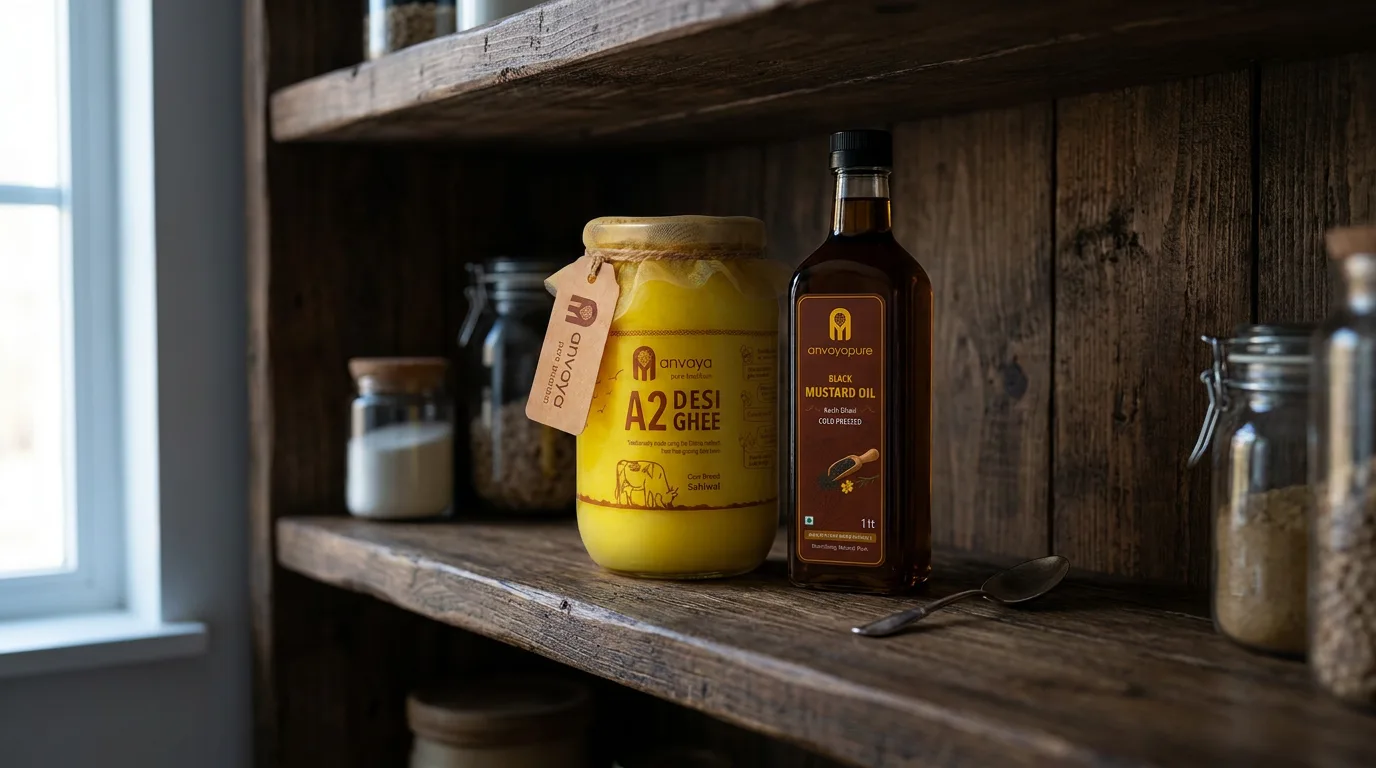
Keep both in a closed cupboard away from the cooker, and always use a dry spoon. That is most of it. Ghee does not need a fridge. Mustard oil does not either, and it mainly needs to be kept out of direct light.
The two things that actually spoil these products are water and air. Heat and light just speed both up.
Ghee
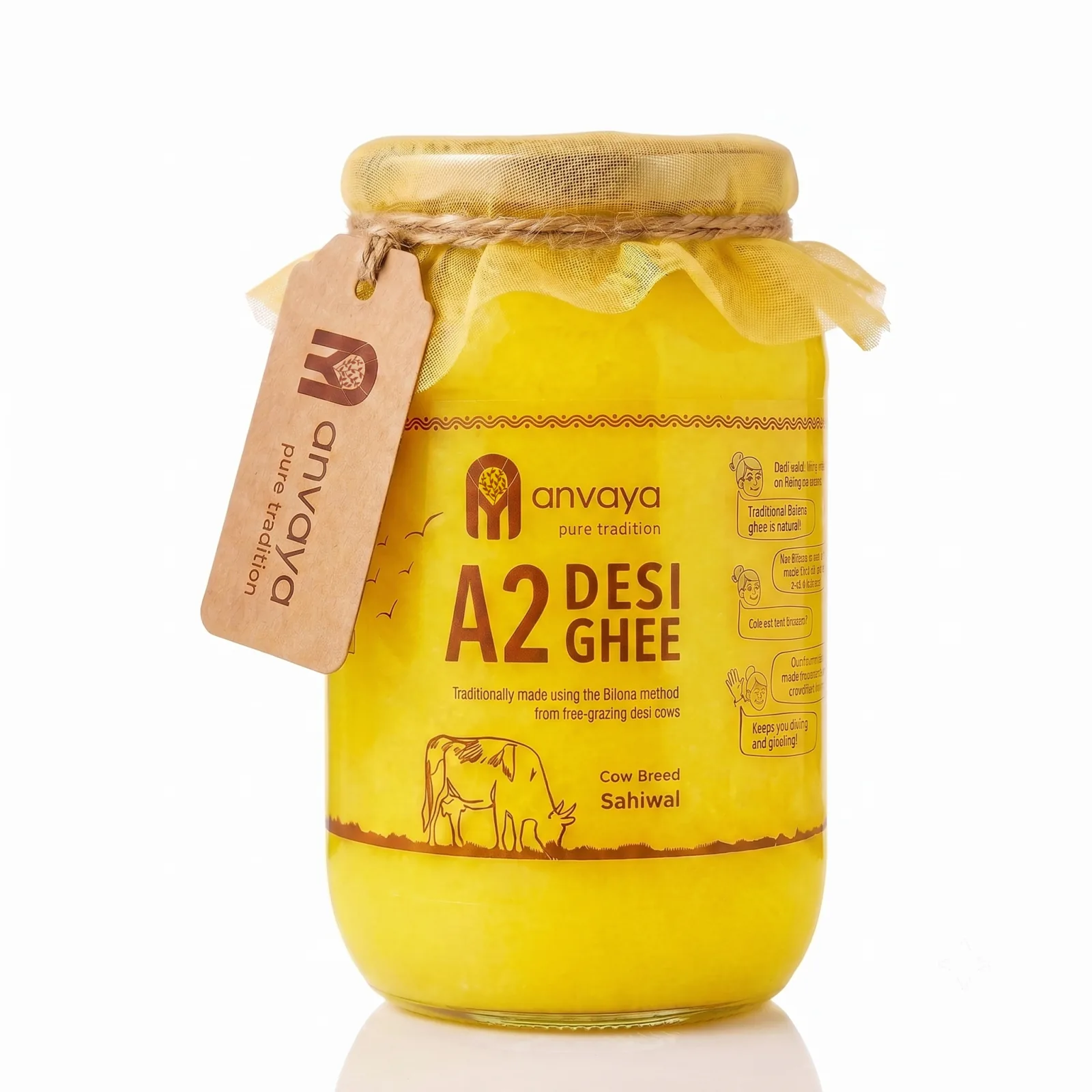
Room temperature is correct. Ghee has had its water cooked out, which is the whole reason it keeps at all where butter would not. A jar on a kitchen shelf is fine.
Our label gives 12 months from the date on the jar. In practice, an unopened jar kept cool will comfortably see that out, and an opened one will too as long as nothing wet has been into it.
Refrigeration is not wrong, it is just unnecessary, and it has a cost. Cold ghee sets rock hard and you end up scraping at it, which is exactly the kind of handling that introduces crumbs. If your kitchen genuinely sits above 35 degrees for weeks, the fridge is a reasonable call. Otherwise leave it out.
The dry spoon rule
This is the only rule that really matters. One wet spoon puts water into the jar, and water lets mould grow on a surface that is otherwise inhospitable to it.
The same applies to a spoon that has been in a hot pan and then dipped back, and to fingers, and to a spoon that has touched food. Keep one spoon for the ghee jar if that is easier than remembering.
Where to keep it
A cupboard, not the counter beside the hob. Ghee that sits next to a burner goes through a heating and cooling cycle every time you cook, and repeated cycling dulls it.
Away from the window, for the same reason.
Closed. A lid that actually seals is worth more than any special container.
Signs it has turned
Ghee announces itself. Rancid ghee smells sharp and faintly of old paint or crayon rather than nutty. That smell is unmistakable once you have met it.
Look for mould at the surface or around the rim, usually a sign that water got in. Any visible mould means the whole jar goes. What shows on the surface is rarely all of it.
A sour or cheesy smell means the same thing.
Grain changing, or ghee going from grainy to smooth after a warm week, is not spoilage. That is the fat recrystallising at a different temperature, and it will often go back the other way when the weather turns.
Ghee darkening slowly over months is normal too. Rancidity announces itself by smell long before it does by colour, so trust your nose over your eyes.
How much to buy at once
Storage problems are usually buying problems. A jar that takes you eight months to finish spends eight months being opened, and every opening is another chance for water and air.
If you cook with ghee daily, the litre is the sensible size. If you use a spoon here and there, buy the 500 ml and finish it. Two small jars bought three months apart will both taste better than one large jar stretched across the year.
Mustard oil
Cool, dark and closed, and the cap tight between uses.
Our label gives 9 months from the date on the bottle, shorter than ghee because unrefined oil has more in it to go off. Cold pressing leaves the natural compounds in the oil rather than stripping them out, which is the point of buying it and also the reason it does not sit around forever.
Light is the main enemy. Our bottles are amber glass, which is doing part of that job, but a bottle left on a sunny windowsill will still deteriorate. Put it in the cupboard.
Do not decant into a clear jar for looks. Do not keep it in plastic long term.
If it has gone
Fresh mustard oil is sharp on the nose in a way that makes your eyes prick slightly. That is allyl isothiocyanate and it is supposed to be there.
Oil that has turned smells stale and flat, or faintly of crayon, and the sharpness is gone or replaced by something sour. It may also feel tacky on the fingers.
Cloudiness in cold weather is not spoilage. Unrefined oil thickens and can look hazy below about 15 degrees, and it clears again when it warms. Sediment at the bottom of a cold-pressed bottle is normal too.
Through the year
In summer, above 30 degrees, ghee stays liquid and that is fine. It changes nothing except how it pours. Keep oil away from any wall that gets afternoon sun.
In winter, below 15 degrees, ghee sets hard and mustard oil goes cloudy. Both are normal. Let a spoonful of ghee sit in a warm pan rather than putting the jar near a flame to soften it, because uneven heating is worse than cold.
In monsoon, humidity is the risk, and humidity means water, and water is the thing to keep out. This is the season to be strict about the dry spoon and about closing lids properly.
If you are away
For a trip of a week or two, nothing needs doing. Close the lids and go.
For longer, move both to the coolest cupboard in the house and away from any window. If you are leaving for months, an unopened jar keeps better than an opened one, so it is worth finishing the open jar before you go rather than starting a new one.
Umesh Pratap Verma
Founder, Anvayapure
Founder of Anvayapure. Custodian of Ma Sumitra Devi Goshala in Uttar Pradesh, and the man who insisted on Sahiwal Bilona over shortcuts.