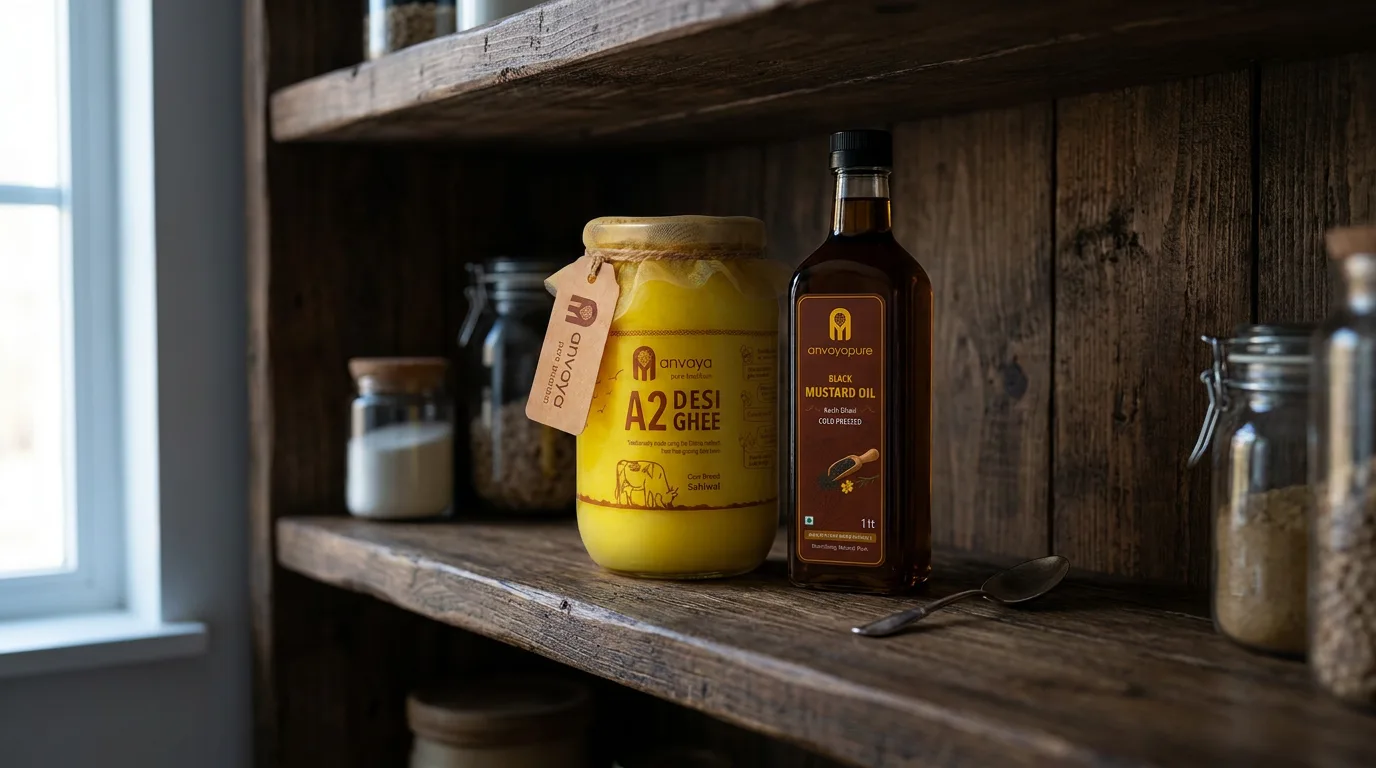
How to Use Ghee in Festival Sweets
Grainy, slow-cooked ghee behaves differently in mithai. When to melt it, when to add the sugar, how to tell a halwa is properly roasted, and how much to buy.
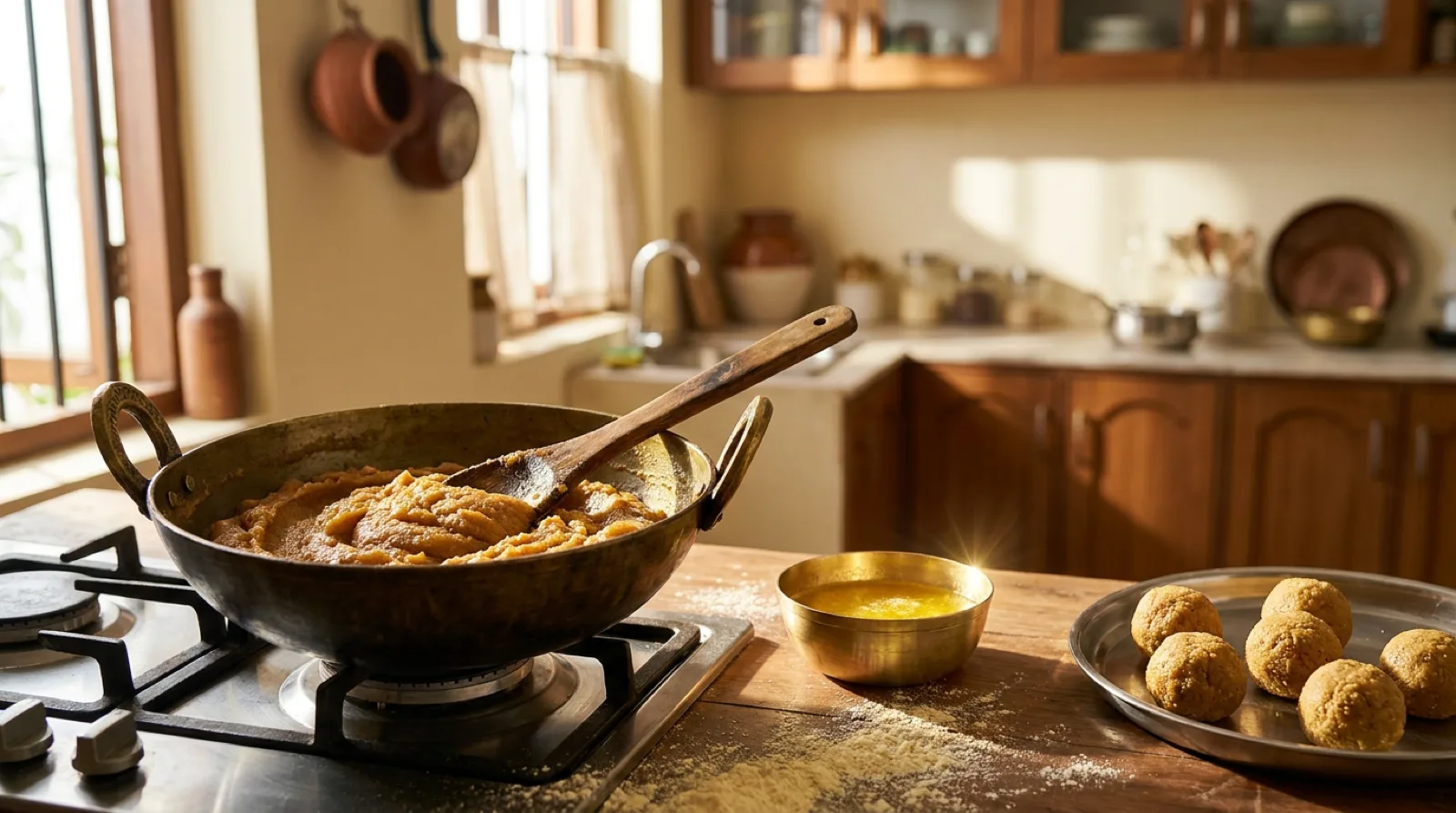
Festival season is the one time of year most kitchens buy ghee by the litre instead of the spoon. It is also when the difference between one ghee and another stops being abstract. A besan laddoo made with grainy, slow-cooked ghee smells different from the same laddoo made with a smooth commercial one, and it behaves differently in the pan.
Here is what actually changes, and how to work with it.
Grainy is not a fault
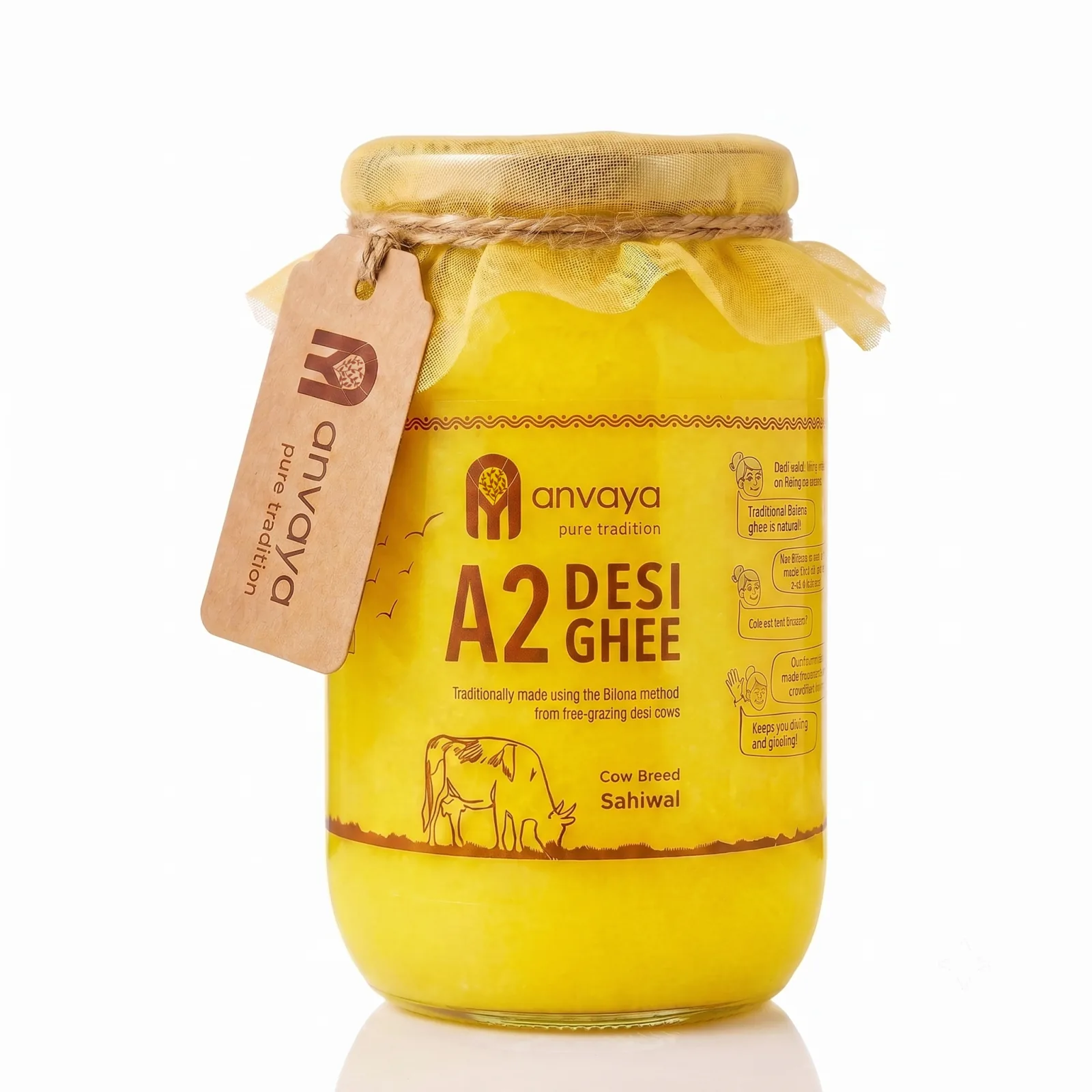
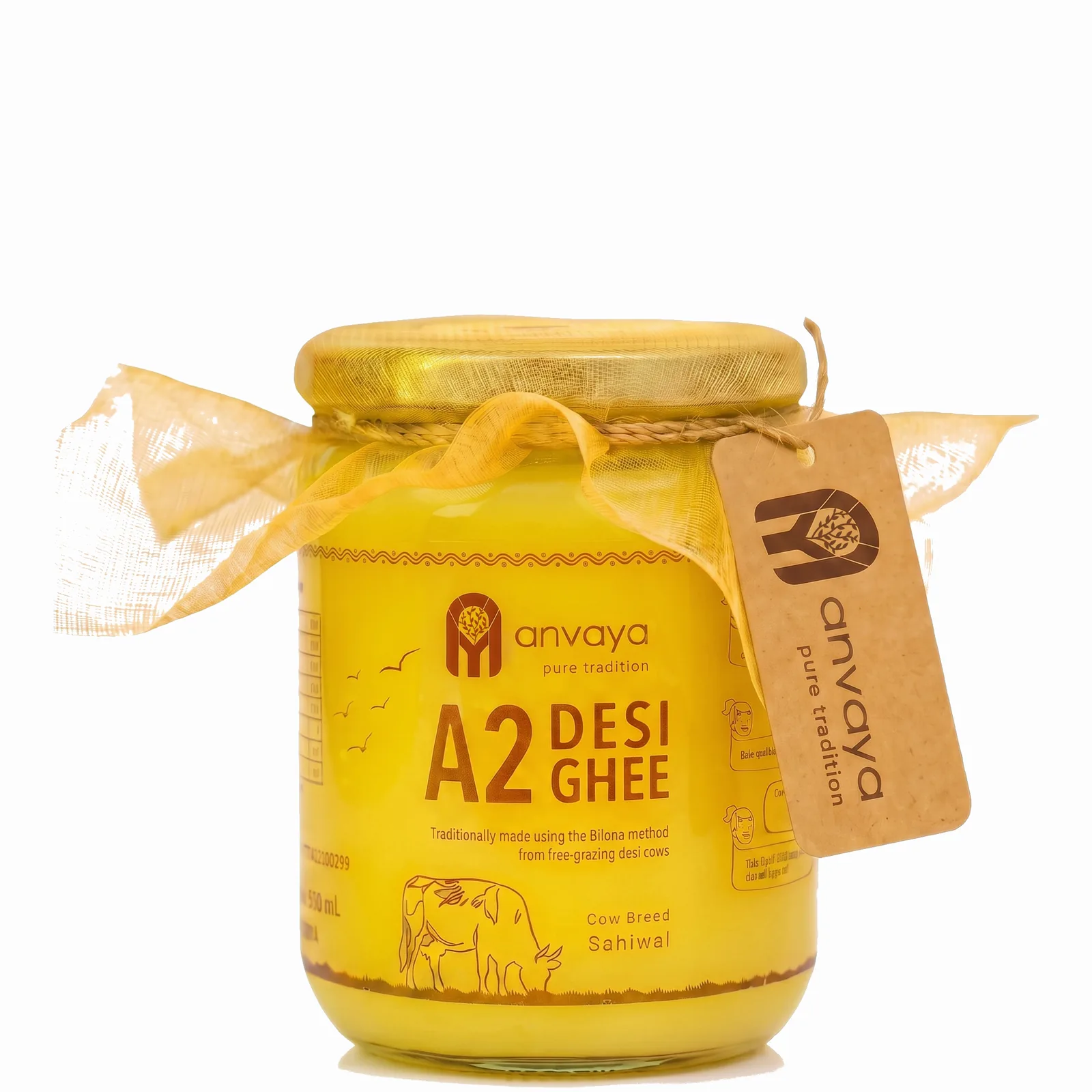
Ghee made the bilona way — milk set to curd overnight, churned by hand, then cooked slow on a wood fire — sets grainy rather than glassy. That texture is fat crystallising slowly instead of being chilled fast in a factory.
It melts to the same clear gold as any other ghee. What you notice is the aroma: it arrives sooner and carries further. In a sweet where ghee is the flavour rather than the cooking medium, that is the entire point.
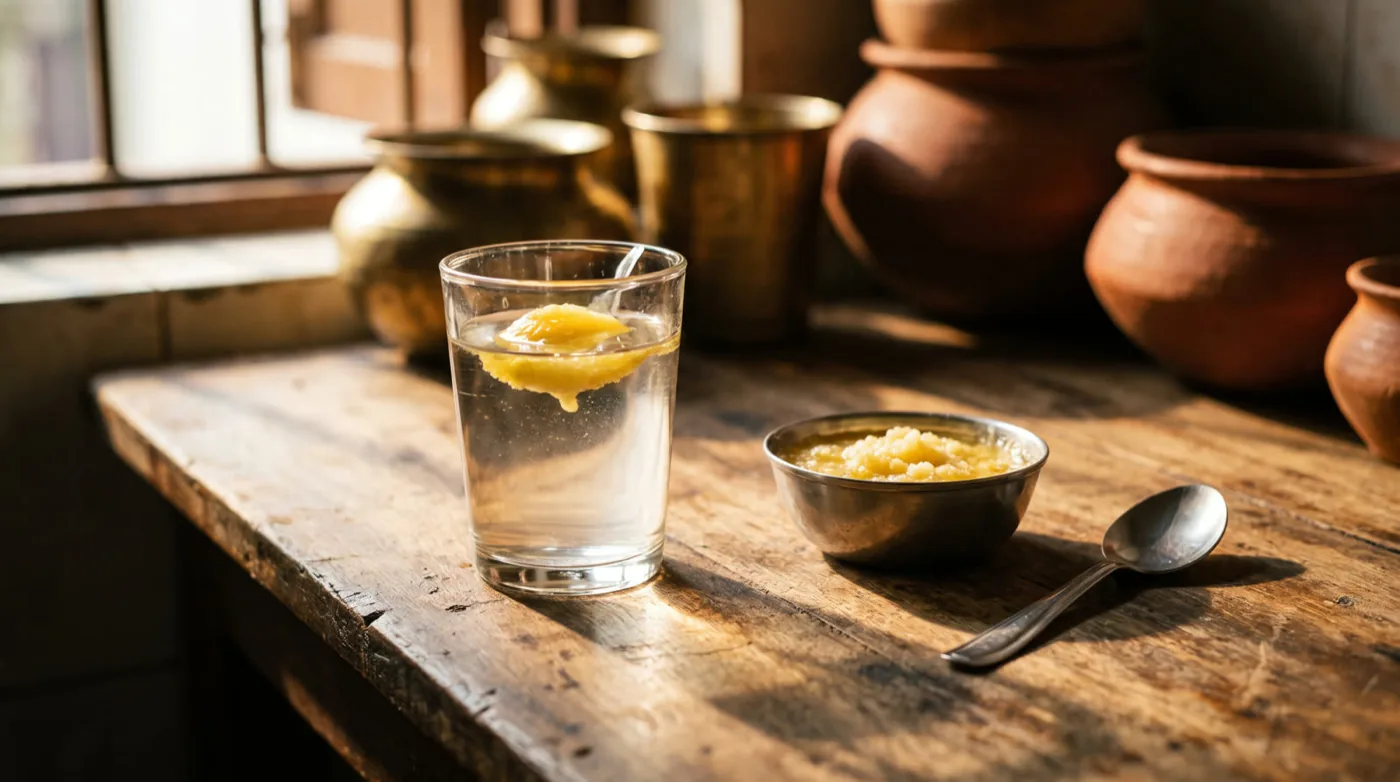
If your jar has set firm and pale in a cold kitchen, nothing is wrong with it. Ghee changes texture with the room.
Warm it, do not melt it hard
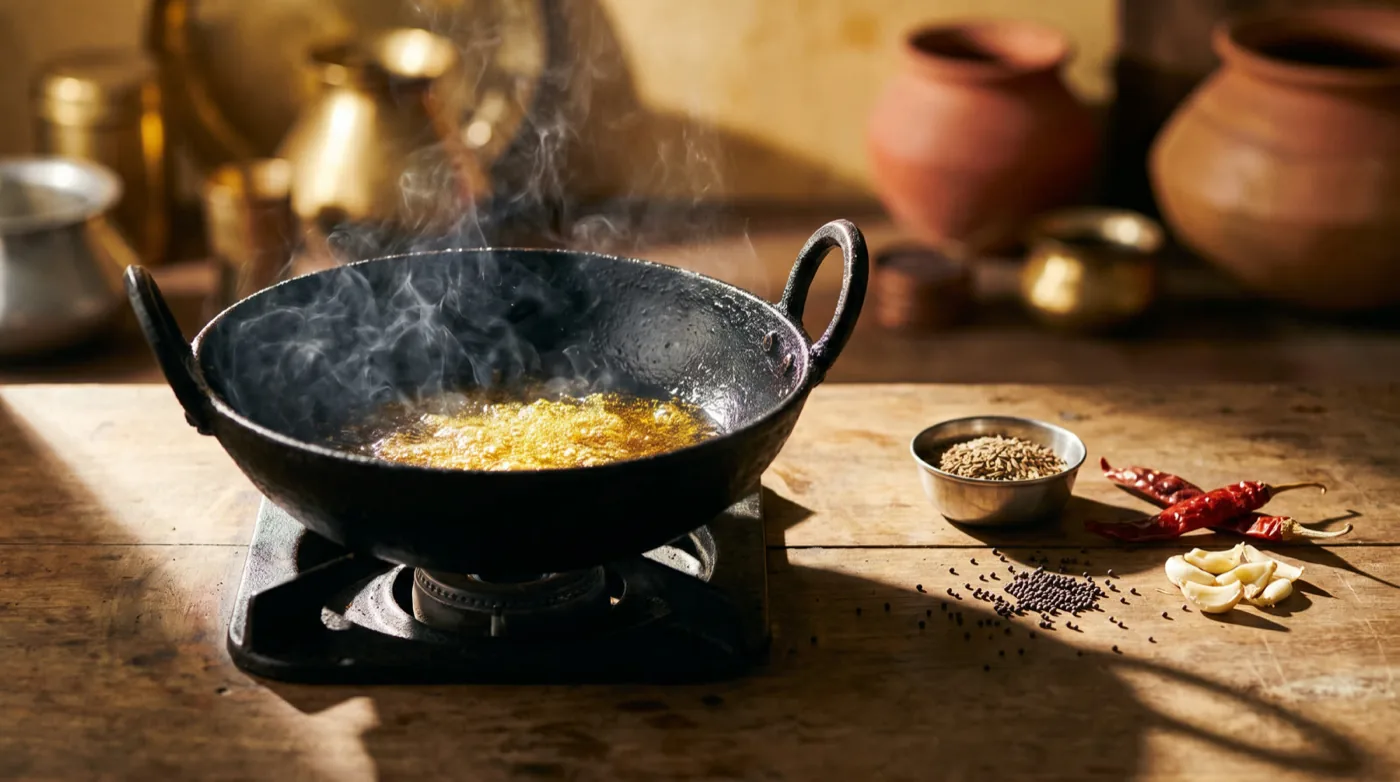
The most common mistake in festival cooking is putting ghee on high heat to melt it quickly. Ghee carries its aroma in volatile compounds, and hard heat drives them off before the flour ever hits the pan.
Melt it on low until it is just liquid and still smells of itself. If it is smoking, it has already lost the thing you paid for.
Halwa: the ghee comes back
Atta and sooji halwa follow the same rule. You are roasting flour in ghee until it turns the colour of wet sand and the raw smell goes. That takes longer than most recipes admit — a good atta halwa is fifteen to twenty minutes of patient stirring on medium-low.
The sign to watch for is the ghee separating out again at the edges of the pan. Flour absorbs it during roasting and releases it once it is properly cooked. When you see that sheen come back, the roast is done. Add your liquid then.
Laddoo: temperature does the binding
Besan laddoo fails at the shaping stage far more often than at the roasting stage, and it is almost always temperature.
Roast the besan in ghee until it loosens and smells nutty rather than raw. Then let the mixture cool until it is warm to the touch but not hot — around body temperature. Too hot and it will not hold; too cold and the ghee has set hard and the mixture crumbles.
Add the sugar only once it has cooled to that point. Sugar added to hot besan melts and the laddoo turns dense and sticky instead of short.
Barfi and katli: the ghee is a release agent
For barfi, katli and anything you set in a tray, ghee does a second job: it stops the sugar sticking. Grease the tray and your palette knife, not just the pan.
A thin film is enough. Too much and the set piece slides rather than cuts.
How much to buy
Rough working figures for home quantities, so you are not halfway through and short:
- Besan laddoo — about 250 ml of ghee per 500 g of besan
- Atta or sooji halwa — roughly equal parts ghee and flour by volume for a rich version, half that for everyday
- Barfi — 2 to 3 tablespoons, mostly for greasing and finishing
- Puri and festival frying — separate this from your sweets ghee entirely
A litre covers a normal round of festival sweets for a family with some left for daily cooking. If you are cooking for a large gathering, buy before the week itself rather than during it.
What to do with what is left
Ghee does not need refrigeration. It needs a dry spoon and a closed lid.
Every crumb of flour or drop of water that goes back into the jar is what eventually turns ghee sour, not age. Keep the jar out of direct sun, use a spoon that has not been in anything else, and it will outlast the season comfortably.
Our A2 ghee is made in the cultured bilona style described here — set to curd, hand-churned, cooked on a wood fire. If you want the longer version of why that method changes the result, we wrote about it in the bilona method.
Umesh Pratap Verma
Founder, Anvayapure
Founder of Anvayapure. Custodian of Ma Sumitra Devi Goshala in Uttar Pradesh, and the man who insisted on Sahiwal Bilona over shortcuts.