Mustard Oil for Hair and Skin
Warm it, work it into the scalp, leave it an hour, wash it out. The traditional uses are worth knowing, and so is the patch test nobody mentions.
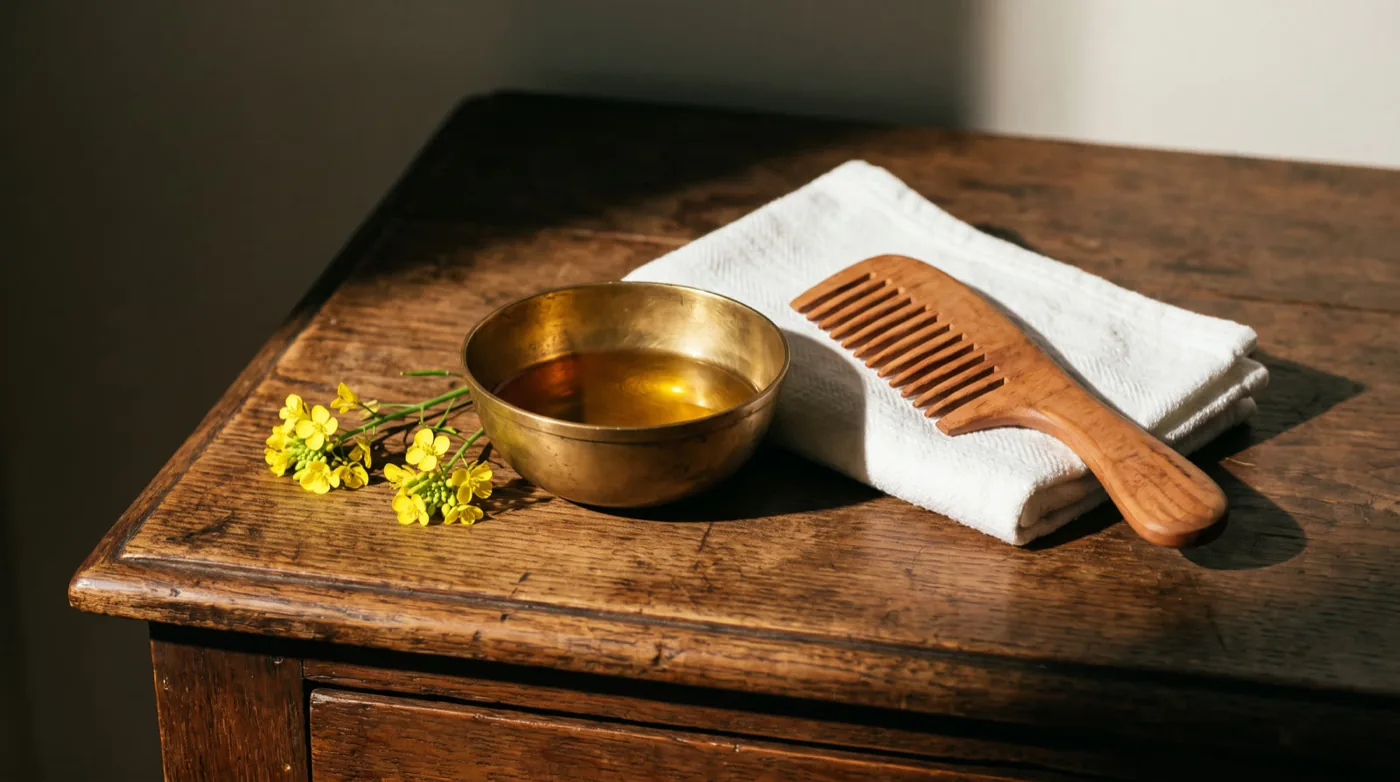
Warm the oil until it is comfortable on the wrist, work it into the scalp with your fingertips for ten minutes, leave it an hour, then wash it out. That is the method behind almost every traditional use of mustard oil on hair.
Before any of it, do a patch test. Mustard oil is pungent because of allyl isothiocyanate, the same compound that gives wasabi its bite, and on some skin it stings or reddens. A little on the inner forearm, left for a day, tells you whether your skin is in that group.
What is actually known
This deserves saying plainly, because the internet is not careful about it.
Mustard oil has been used on hair and skin across North and East India for generations. That record is real and it is why the practice survives. What does not exist is a body of clinical evidence showing it grows hair or reverses skin conditions.
What can be said with confidence: it is an occlusive oil, so it slows water loss from skin and coats the hair shaft. It contains alpha linolenic acid and vitamin E. It has some antimicrobial activity in laboratory conditions, which is consistent with how it has traditionally been used, though a petri dish is not a scalp.
That is a reasonable case for a good oil. It is not a case for a cure, and this article will not make one.
For hair
The champi
Warm two or three tablespoons. Not hot. Warm enough that it spreads easily and feels pleasant.
Section the hair and apply to the scalp rather than the lengths, because the scalp is the point. Massage with the pads of the fingers, not the nails, in small circles. Ten minutes is the traditional length and there is no reason to rush it.
Leave it for an hour. Overnight is common and does no harm beyond your pillowcase, though an hour is enough.
Wash out with a mild shampoo. It will take two rounds. Mustard oil is heavier than coconut oil and does not rinse in one pass.
Once or twice a week is plenty.
For a flaky scalp
The traditional mix is mustard oil with a little lemon juice, or with fenugreek seeds soaked overnight and ground in.
Keep it to the scalp, leave it 30 minutes, wash it out. If it stings beyond a mild warmth, wash it out immediately and do not repeat. Persistent flaking that does not respond is worth taking to a doctor rather than a kitchen cupboard.
On the lengths
A very small amount, warmed between the palms and smoothed over the ends only, before a wash. Mustard oil is not a leave-in. It is too heavy and too strongly scented for that.
For skin
Winter malish
The most defensible use. Massaged into dry skin after a bath while the skin is still slightly damp, mustard oil slows water loss the way any occlusive oil does. In dry North Indian winters that is genuinely useful.
Warm it first. Work it in until it stops feeling greasy, which takes longer than with a light oil.
Cracked heels
Oil at night, cotton socks over the top, wash in the morning. The socks matter more than the oil does, because they stop it transferring to the bedding and keep it in contact with the skin.
On the face
Be cautious. Mustard oil is comedogenic enough that it blocks pores on many people, and the pungency is harder to tolerate on facial skin. There are gentler oils for this. Traditional use does not point at the face either.
Baby malish
Mustard oil massage for infants is deeply established across North India, and it is also the use where the evidence has become genuinely contested. Several studies have raised concerns about mustard oil and the infant skin barrier, and some paediatric guidance in India now recommends against it in favour of lighter oils.
This is a case where tradition and current advice do not agree. Ask your paediatrician. That is a real question with a real answer for your child, and it is not one to take from a company that sells the oil.
Which oil to use for this
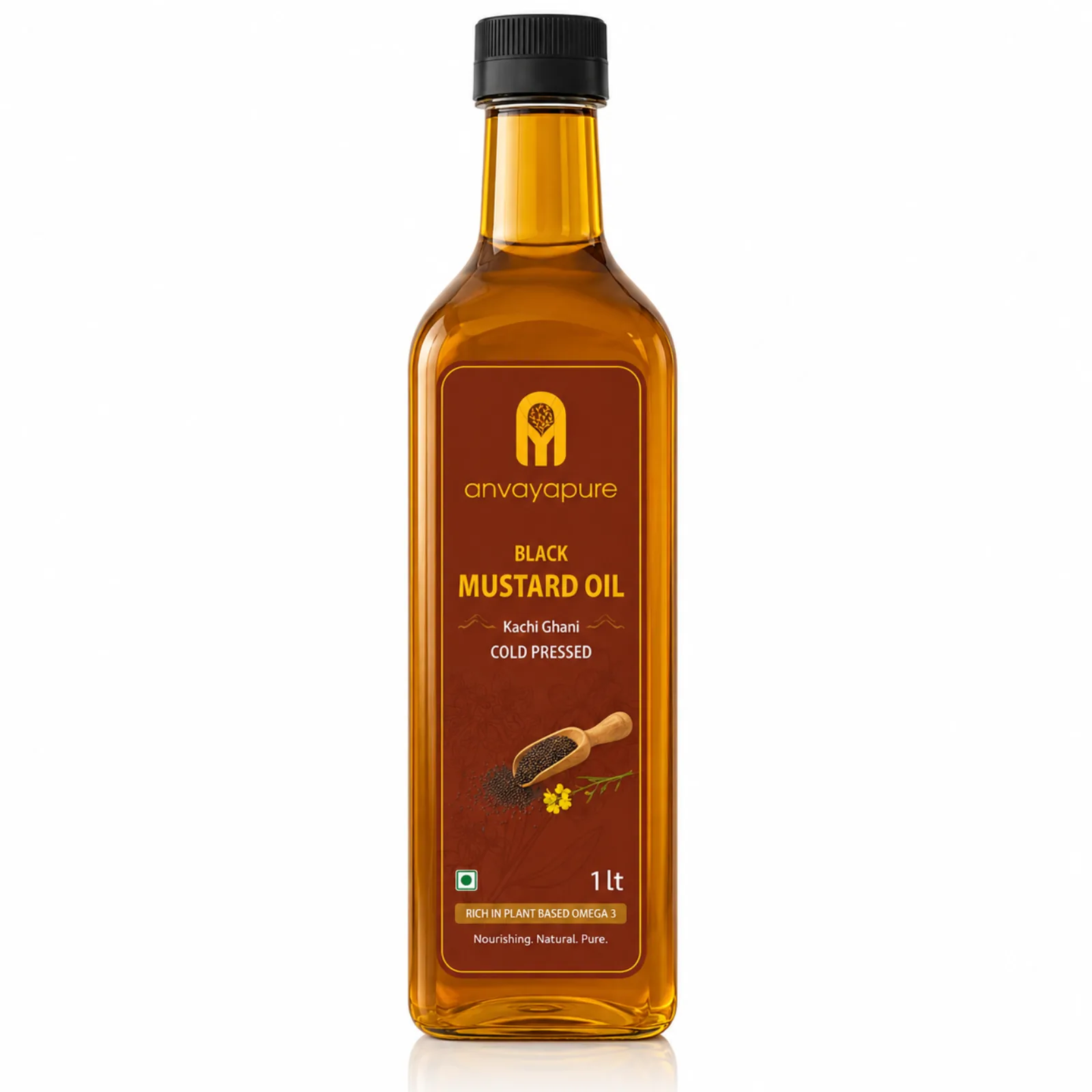
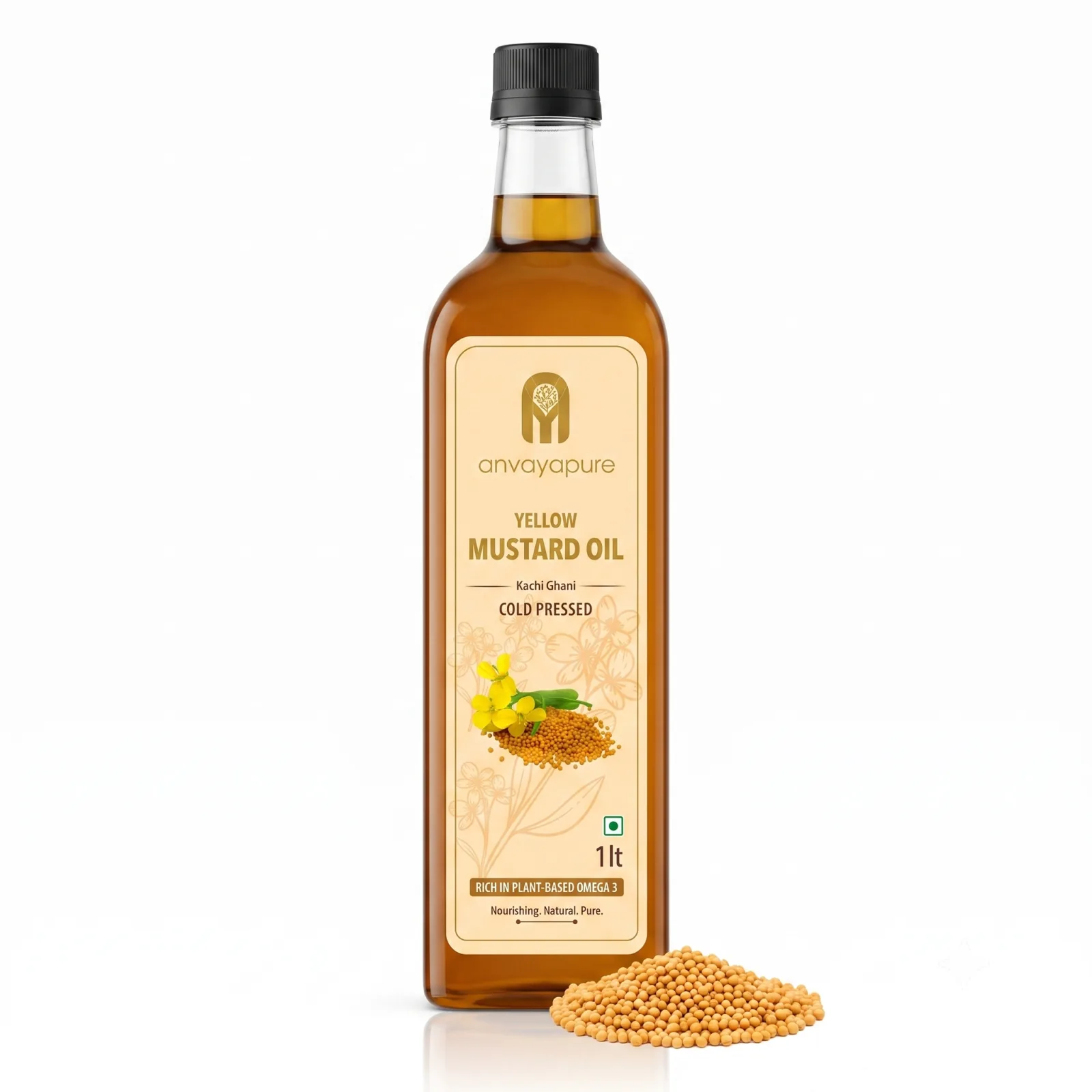
Cold pressed and unrefined, because refined mustard oil has had the compounds stripped out of it and there is little reason to choose it here.
Kachi ghani on the label means pressed in a ghani without heat.
Check the smell. It should be sharp enough to catch the back of your nose. Flat mustard oil is either refined, old or diluted.
Buy the smaller bottle if you are only using it on hair and skin. Ours is 9 months from the date on the bottle, and an unrefined oil used a spoonful at a time can easily outlive that.
Store it away from light with the cap tight. Do not keep the bottle in a steamy bathroom.
Getting it out of your hair
The complaint people have after their first champi is that the oil will not wash out and the smell stays.
Both are solvable. Apply shampoo to dry oiled hair before any water goes near it, work it through, and only then wet it. Shampoo binds to oil better without water competing for it, and one round done this way beats three done wet.
For the smell, a final rinse with water and a splash of lemon juice or diluted apple cider vinegar cuts it. So does washing in the morning rather than at night, because the smell fades through the day either way.
If your hair is fine and the oil still feels heavy afterwards, use less next time and keep it strictly on the scalp. Most people apply two or three times what they need.
Anvayapure Editorial
Written by the Anvayapure team, on traditional food, cooking, and wellness.