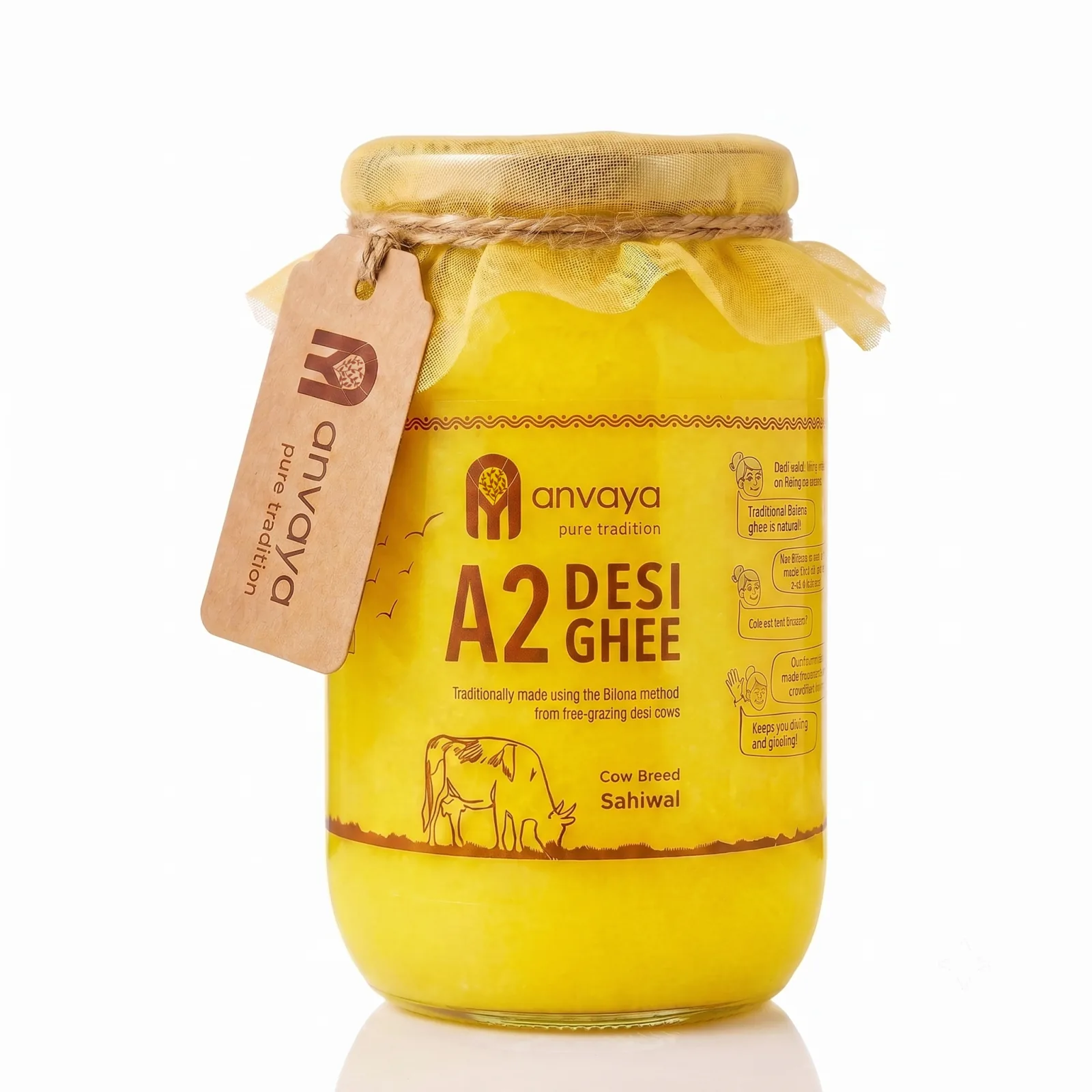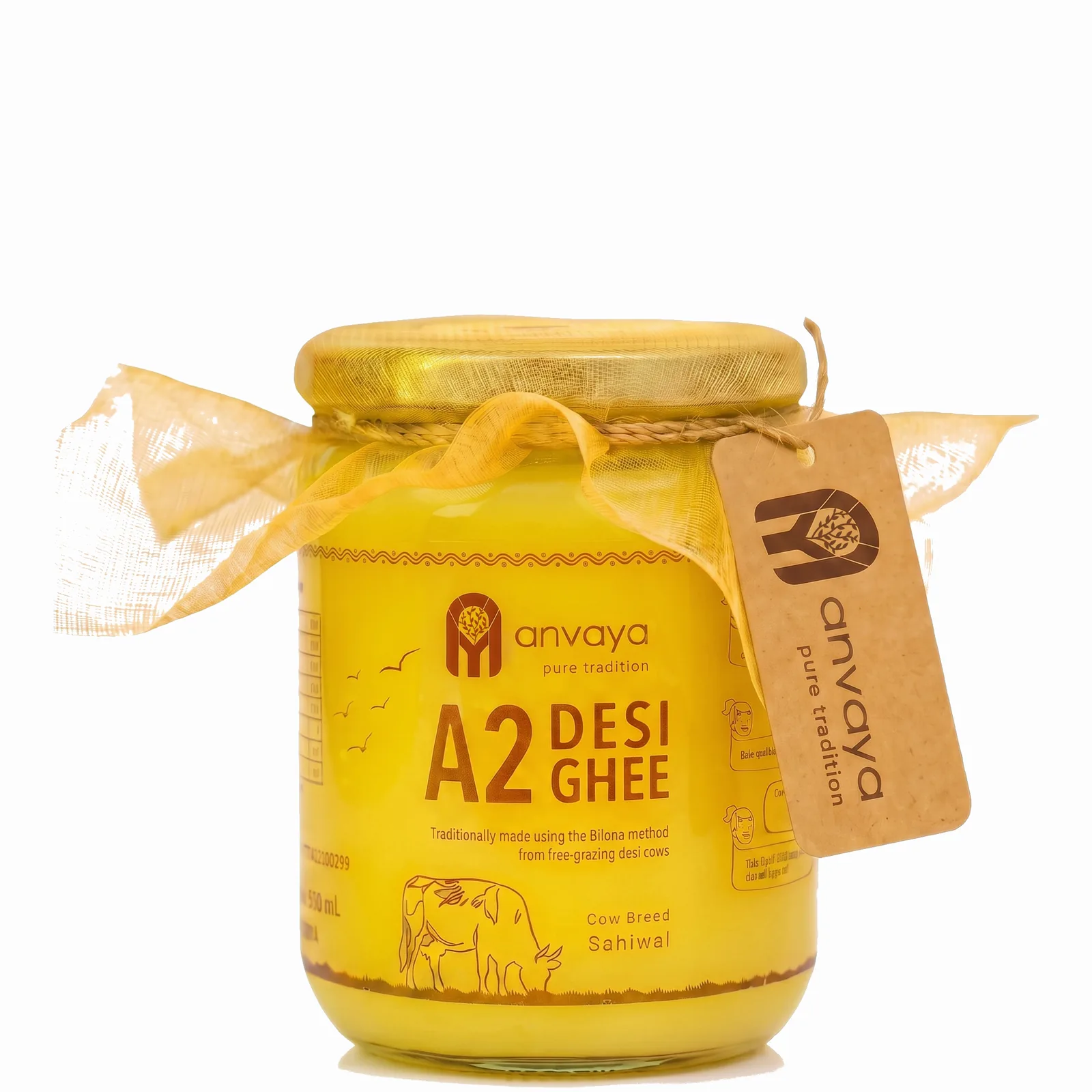
Cooking Indian Food With Ghee
Ghee goes in at the two ends of a dish, the tadka at the start and the spoon at the finish. In the middle it is usually just an expensive frying fat.
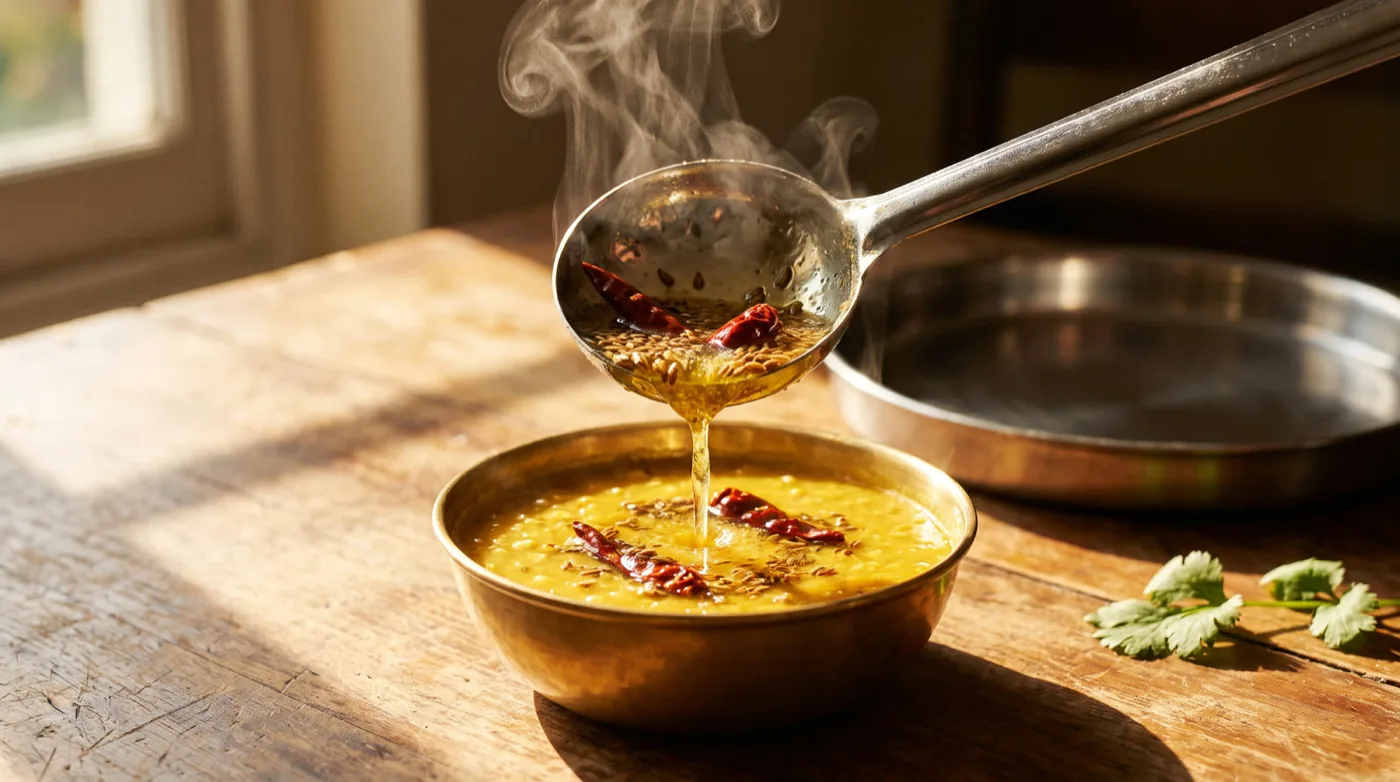
Ghee earns its place at the two ends of a dish. It goes in at the start, in the tadka, where hot fat pulls the flavour out of whole spices. And it goes in at the end, a spoon stirred through off the heat, where it stays aromatic because nothing has cooked it away.
In the middle, as a general frying fat, ghee mostly just costs more than oil. Knowing that saves you a lot of ghee.
Tadka, and why order matters
Heat the ghee until it shimmers. Then whole spices, cumin or mustard seed, and wait for them to pop. Then hing, which burns in seconds. Then dried chillies, then garlic or ginger, then curry leaves last because they spit.
Each ingredient wants a different temperature and a different length of time, which is the entire reason for the sequence. Put the garlic in with the cumin and by the time the cumin is ready the garlic is bitter.
For dal, make the tadka separately and pour it over at the end. Take the pan off the flame first, or the residual heat carries the spices past where you wanted them.
Seven places it matters
Dal tadka
The dal itself needs no ghee. Boil it with turmeric and salt until it collapses.
Everything happens in the tempering. Ghee, cumin, hing, dried red chilli, then chopped garlic until it is just turning gold. Pour it over the hot dal and put the lid on for a minute so the aroma goes into the dal rather than the kitchen.
A second spoon of raw ghee stirred in at the table is not excessive. It is how it is eaten.
Khichdi
This is the dish where ghee is structural rather than decorative. Rice and moong dal cooked soft, and enough ghee that the grains stay separate and glossy instead of turning to paste.
Start with ghee in the pot, fry the cumin and the dal in it before the water goes in, and finish with more.
Ghee rice
Fry whole spices, cardamom, clove, a small piece of cassia, in ghee until they smell. Add drained soaked rice and fry it for a minute so every grain gets coated. Then hot water, then leave it alone.
The frying step is what stops it going sticky. Skipping it gives you rice with ghee poured on, which is a different and worse thing.
Moong dal halwa
The most demanding use, and the one that will teach you the most.
Soaked, ground moong dal goes into ghee on low heat and gets stirred, and stirred, and stirred. It takes 40 minutes and there is no shortcut. It moves through pale paste, then sandy, then grainy, then finally releases the ghee back out at the edges and smells nutty.
That release is the signal. Add the milk and sugar only after it happens. Add them early and you get a wet paste that never comes right.
Parathas
Ghee twice. A little worked into the dough, and more brushed onto the rolled layers before folding, which is what makes the layers separate.
Cook on a dry tawa first, then add ghee once each side has set. Adding it too early makes the paratha absorb rather than crisp.
Ghee roast dosa
Ghee down the edges of the dosa while it cooks, not on top. It runs underneath and crisps the base.
The characteristic smell of a good ghee roast is ghee browning against a hot tawa, which only happens if the tawa is genuinely hot.
Besan ladoo
Same principle as the halwa. Besan is roasted in ghee on low heat until the raw flour smell goes and the colour turns from pale yellow to sand.
Undercook it and the ladoos taste of raw flour, and no amount of sugar hides it. This takes 20 minutes of attention.
Sheera and sooji halwa
Faster than moong dal and built on the same idea. Sooji goes into ghee and is roasted until it smells toasted and turns the colour of wet sand, then hot water or milk goes in and it seizes up in seconds.
Two things go wrong here. People under-roast, which leaves a raw taste, and people add cold liquid, which makes it lumpy. Keep the liquid hot and pour it in while stirring.
Practical notes
Ghee sits near 250 degrees before it smokes, comfortably above what a home burner does, so it is stable for frying. It is simply expensive for the job.
Ghee and oil together is a legitimate compromise and a very common one in Indian kitchens. Oil does the frying, a spoon of ghee goes in near the end for the smell. You get most of the effect for a fraction of the ghee.
Do not use it where you want a clean background. A tomato-heavy curry or a light salad dressing does not benefit.
Reheating dulls it. If a dish is going into the fridge and coming out again tomorrow, hold back the finishing spoon and add it fresh when you reheat.
Grainy ghee behaves exactly like smooth ghee once it is in the pan. The texture is about how it cooled, not about how it cooks.
Measure it. A dish that needs a spoon does not get better with four, it just gets heavy, and you go through a jar in a fortnight.
The one-line version
Use ghee where you can taste it, which means at the start and at the end. Use oil for the work in between.
Anvayapure Editorial
Written by the Anvayapure team, on traditional food, cooking, and wellness.