
Bilona Ghee vs Machine-Made Ghee
Bilona is the ancient 8-step process: milk → curd → hand-churned butter → slow-cooked ghee. Machine-made ghee skips fermentation and extracts butter directly from cream. The shortcut saves 2 days but sacrifices flavor, nutrition, and tradition.
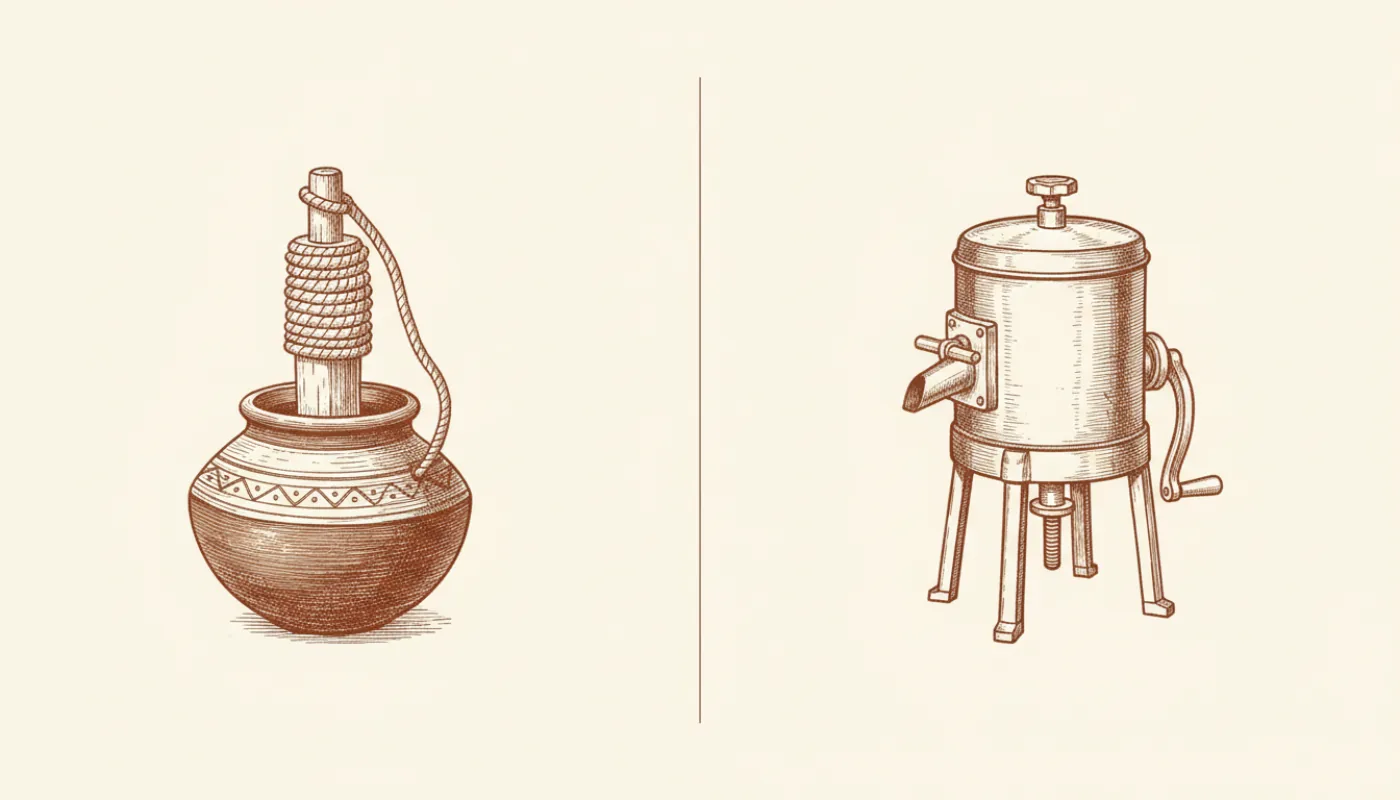
| Attribute | Bilona Ghee | Machine-Made Ghee |
|---|---|---|
| Starting point | Cultured curd | Fresh cream |
| Processing time | 36 to 48 hours | 2 to 4 hours |
| Churning | Hand/wood bilona | High-speed centrifuge |
| Cooking | Slow, wood-fire | Steam-jacketed kettle |
| Aroma | Deep, nutty, complex | Mild, flat |
| Nutrient retention | High (CLA, K2, omega-3) | Lower due to high heat |
| Shelf life (room temp) | 12 months | 6 to 9 months |
Our verdict
Bilona ghee is the gold standard, richer, more nutritious, more flavorful. Machine ghee is a cheaper shortcut that misses the cultured-curd magic.
Frequently asked
Why is Bilona ghee more expensive?
It needs 30+ litres of A2 milk and 2 days of work to produce 1 litre of ghee. Machine ghee uses cream from any milk and finishes in hours.
Can I tell the difference at home?
Yes. Bilona ghee is granular when set, releases a deep nutty aroma when warmed, and tastes complex where machine ghee tastes flatly buttery.
Is hand-churning actually different from machines?
Yes. Slow churning at low speed preserves heat-sensitive vitamins (A, D, K2) and short-chain fatty acids that high-speed processing degrades.
Ready to taste the difference?
Try our pure, lab-tested bilona ghee, made the traditional way.