
A2 Ghee vs A1 Ghee, What's the Real Difference?
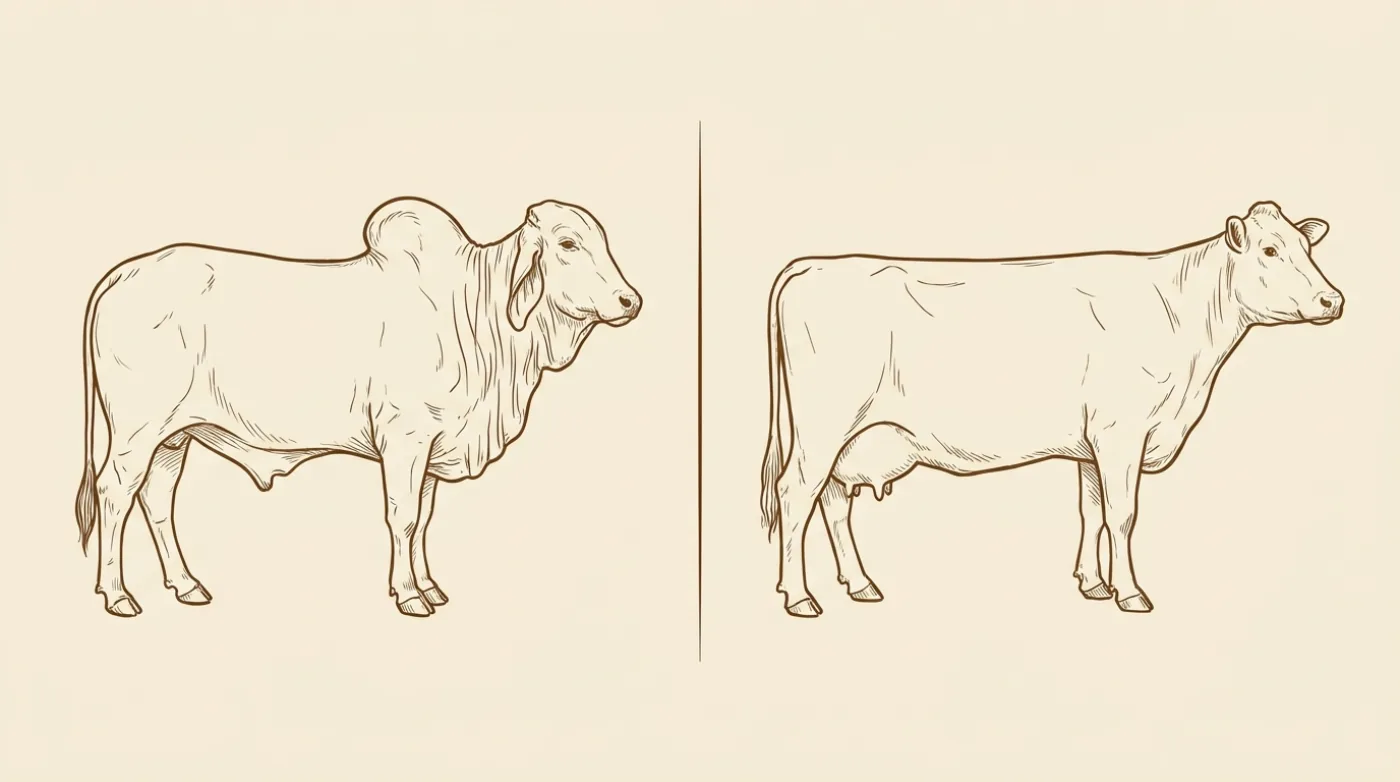
Both come from cow milk. A2 ghee is made from the milk of indigenous Indian breeds such as Sahiwal and Gir, which carries only A2 beta-casein. A1 ghee, in practice, means ghee from Holstein, Jersey and crossbred herds, whose milk carries A1. Ghee is almost entirely fat, so very little of either protein reaches the jar.
| Attribute | A2 Ghee | A1 Ghee |
|---|---|---|
| Source breed | Sahiwal, Gir and other native breeds | Holstein, Jersey and crossbreds |
| Protein in the milk | A2 beta-casein only | A1 and A2 mixed |
| Protein left in the ghee | Very little, most is cooked off | Very little, most is cooked off |
| BCM-7 peptide | Not released | Can be released from A1 in digestion |
| Proven health advantage | None established | None established |
| Aroma & granularity | Set by the method: curd-churned is stronger and grainier | Usually cream-separated: milder and smoother |
| Price | Several times commercial ghee | Lower |
Our verdict
The real difference is the breed, and the farming behind it, not a proven health effect. Very little protein survives into ghee. Choose A2 for provenance and bilona for taste; choose regular ghee if price matters most.
Frequently asked
Is A2 ghee really better than A1?
Not in any way proven for health, and we do not claim it is. A2 tells you the milk came from a native breed, which says something real about the farming. Taste depends more on the method, curd-churned or cream-separated, than on the protein.
How can I check if ghee is truly A2?
There is no A2 inspection regime in India, so a label alone proves little. Look for the named breed, the farm, whether it was curd-churned, and a lab report you can open and read rather than a badge.
Is A2 ghee worth the price?
If you cook with ghee daily and care which farm and breed it came from, or can taste the difference in curd-churned ghee, yes. If you want a clean cooking fat, a decent commercial ghee does the job.
Ready to taste the difference?
Try our pure, lab-tested a2 ghee, made the traditional way.